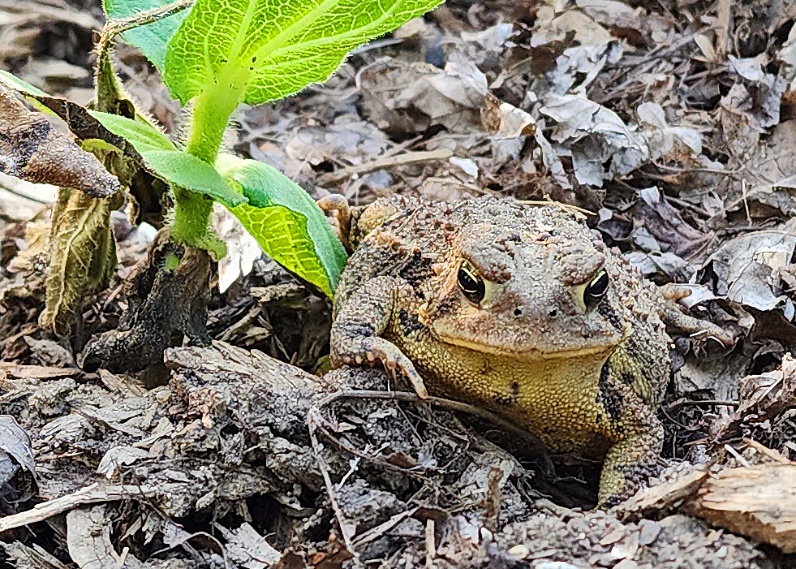
Rural Perspectives: The Eastern American Toad — a gardener’s friend
by Diane Constable
The Eastern American Toad (Anaxyrus anaxyrus americanus) is found in many places, such as gardens, woodlands, grasslands and marshes, as long as there is some water and cover to hide in.
To protect itself, it turns shades of green, brown and yellow, depending on its living quarters. Toads also have other tools to fool their predators, including playing dead, excreting a bad-tasting substance from its “bumps,” and even peeing on itself.
In the spring, these toads find their way to the nearby pond they grew up in so they can find a mate and lay their eggs. It’s interesting to note that they avoid their siblings by recognizing their close relatives partly by their individual songs.
The female lays a jelly-like string of up to 15,000 eggs along grasses at the water’s edge. The tadpoles hatch within 3-12 days then spend 40-60 days in the pond as they morph into mini-toads less than an inch long. The young toads leave the pond for good to spend most of their lives on land and immediately start gobbling up tiny insects, ants, and spiders. The male toad will grow to about 3.5 inches long; the female is much bigger, up to 5.5 inches long. They live up to 10 years.
An adult can eat up to 1,000 insects, flies, mosquitos, worms, and slugs each day — definitely a gardener’s friend. Although toads do hop, they will sit and wait for prey to come along, then grab the prey with their sticky tongues. These toads make their homes under logs, near rocks, or dug into soft dirt. In the winter they hibernate by digging in deeper to get below the frost line.
Fun Fact: When it sheds its skin, the Eastern American Toad wraps the skin around its tongue and consumes it.