Reading Between the Lines
‘Sunrise on the Reaping’: A prequel done right
by Jessica Martell
In 2008, Suzanne Collins lit the world of young adult literature on fire with “The Hunger Games.” Since then, there have been several books and movies, and the phrase “I volunteer as tribute!” has become part of the pop-culture lexicon.
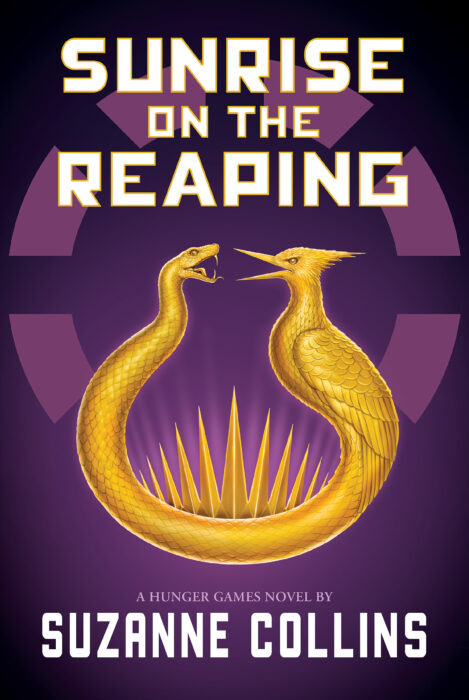
In 2025, Collins delivered “Sunrise on the Reaping,” the second prequel in the Hunger Games canon, which chronicles mentor Haymitch Abernathy’s stint in the arena. Many readers will open this book already knowing Haymitch as a tragic figure with a substance-abuse problem, haunted by the trauma of untold past horrors. Those horrors unfold on the pages of “Sunrise on the Reaping.”
“The Hunger Games” is the name of a sacrificial reparations event in the fictional nation of Panem. Every year, each of the nation’s 12 districts pays tribute to the Capitol in the form of one girl and one boy (aka: the tributes), who are sent into an arena together to battle to the death until one victor remains. The world Collins created contains elements of Shirley Jackson’s classic short story “The Lottery,” mixed with the reality-TV show “Survivor,” along with brutal, gladiator-style entertainment and classic dystopian motifs of ignorance, inequity, and inevitable rebellion.
Collins pulls off a pretty neat trick in “Sunrise on the Reaping”: she manages to build a lot of suspense around the fate of a character many readers already know well. What follows aren’t exactly spoilers—this is simply the nature of a prequel. Fans of “The Hunger Games” first met Haymitch as a mentor to new tributes in the first book. All mentors are previous victors of The Games; therefore, it is generally understood from the beginning that Haymitch will survive the events of this prequel. Additionally, while participating in The Games, Haymitch is focused on trying to break the arena and put an end to The Games. Considering the original book takes place 24 years after “Sunrise on the Reaping,” readers can deduce the outcome of these efforts.
Throughout “Sunrise on the Reaping,” the reader is caught up in the tension of knowing Haymitch will win The Games and fall short in his attempt to end them. This duality is suggested in the title and the opening scenes: Sunrise typically evokes positive feelings of possibility in what lies ahead; the Reaping, in contrast, is the name of the ceremony in which the tributes’ names are selected. Add to that the fact that Haymitch’s birthday falls on Reaping day, and Collins has created a complex juxtaposition of positive and negative emotions from which to launch her story.
While the reader might have some insider knowledge going into this book, Collins uses this story as an opportunity to add texture to the nuanced roles of other characters from the series, such as President Snow and Plutarch Heavensbee. Further, as we learn more about Haymitch’s experiences in the arena and in the aftermath of his victory, readers gain insight into the broken man presented as mentor to Katniss and Peeta in the 74th Hunger Games.
The graphic violence of this book might not be for every reader, but for fans of dystopian fiction in general, or the Hunger Games series in particular, this one is a must-read.