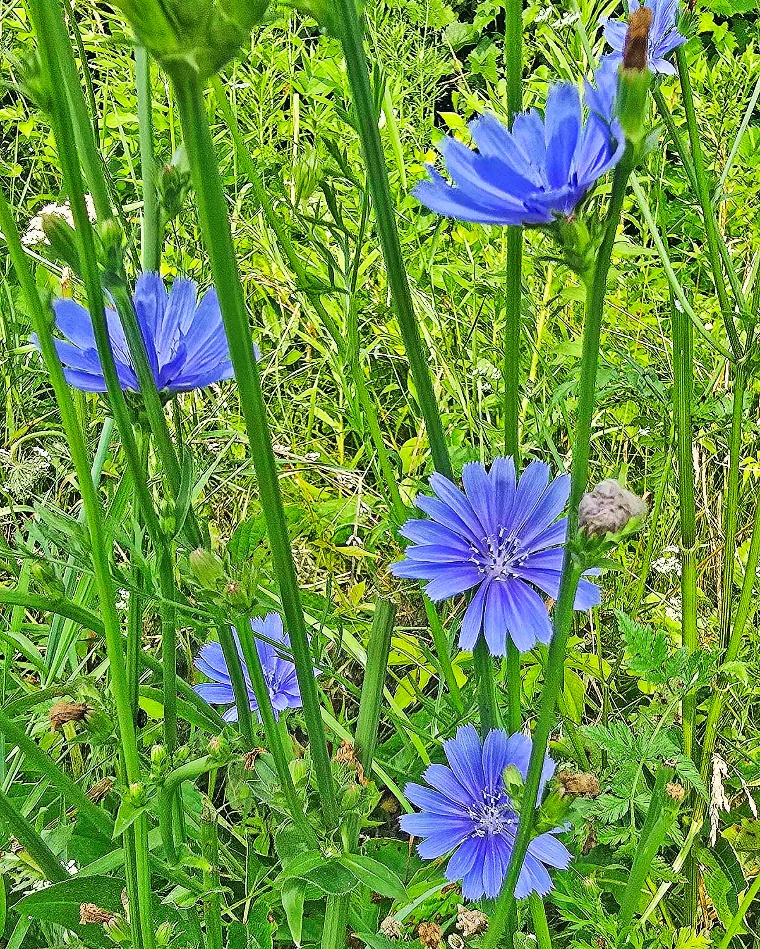
Rural Perspectives: Common chicory a favorite of bees and butterflies
by Diane Constable
Common chicory (Cichorium intybus) is a non-native perennial herb plant that can be found along our roadsides, fallow land, waste areas, and sometimes lawns. Its base leaves and deep taproots resemble its close relative, the dandelion.
The flower stems can grow up to 6 feet tall with flowers spaced vertically along the semi-woody stem. The ragged-edge blue flowers bloom between June and October and are 1-2 inches wide. They can be various shades of blue from periwinkle to cerulean, and can sometimes be pink or white. The blossoms last just a day and usually close by around noon when the sun is high, but may stay open if cloudy. They do well in drought conditions.
It is a nectar plant for many pollinators and a favorite of bees, butterflies, and beetles. Deer, rabbits, small mammals and turkey enjoy eating the foliage, and many species of sparrows and other birds consume the seeds and the insects that feed on it.
Chicory has been used for food and medicine throughout history. The ancient Egyptians, Greeks and Romans cultivated it for a variety of ailments, including liver problems. Its use spread through Europe and made its way to North America in the mid-1700s. The fresh leaves were eaten in salads. The taproots were ground and brewed into a beverage and were often substituted for coffee when coffee was unavailable.
It was, and is, often grown as a high-nutrient, high-mineral, and high-protein plant in livestock pastures.
Fun Fact: It has been shown that the chicory plant has compounds in it that will kill roundworms in cattle, goats, and sheep that feed on it.
As an avid photographer, Diane Constable regularly puts her formal education in both nature and photography to good use. Diane also enjoys gardening and her dogs. She serves on the board of the Ann Arbor Dog Training Club and is editor of the club’s newsletter.