Reading Between the Lines
‘Purple State’ is a campaign for unity
by Jessica Martell
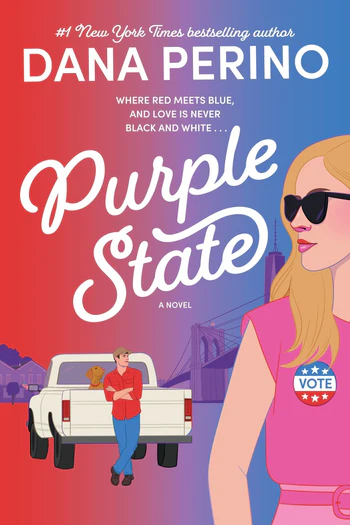
In 2007, Dana Perino made history when she became the first Republican woman to serve as the White House press secretary. Since then, she has worked as a political commentator and written several nonfiction bestsellers. This year, Perino made her fiction debut with “Purple State,” a story of three New York City women finding love in small-town Wisconsin.
As a writer, Perino makes several bold choices in “Purple State.” First, she chose to write a story centered around three liberal young women. This seems risky only because Perino’s established fan base might not be inclined to sympathize with these protagonists. Further, readers from the other side of the political spectrum might be incredulous, looking for ways Perino creates stereotypical caricatures more than well-rounded characters.
“Purple State” follows the story of Dot, a disenchanted PR consultant, who decides to take a job with a Democratic political action committee (PAC) for the year leading up to the 2028 election. The job is to live in Wisconsin, a state notorious for flip-flopping red and blue between election cycles. She is charged with getting to know the people and the issues residents care about, while strategizing with the PAC to deliver a Democratic win in the state.
Dot enlists her two best friends, Harper, an aspiring author, and Mary, a hot-shot attorney, to join her on this adventure. Perino engages Hallmark’s tried-and-true formula: Big city girls plus small-town stud muffins equals romantic comedy “warm fuzzies.” The result: Perino seems to give readers either windows into characters that might be very different from themselves or mirrors to reflect characters that might be familiar.
The next interesting choice Perino makes is writing a story without any real antagonists. Barely any attention is paid to the Republican candidates or their political operatives, who would be the natural adversarial choice, possibly because the author did not want to cast aspersions on her own party. In the story, Dot and her colleagues struggle with the DNC at times, providing some eyebrow-raising revelations about the inner workings of the PAC leadership. While these behind-the-scenes details are some of the most compelling aspects of the book, they don’t really rise to the level of being antagonists. Instead, the real conflict revolves around what Dot, Harper and Mary will do after the election.
By far, Perino’s biggest risk is leaving a major plot point unresolved. As a reader, I find this deeply unsatisfying. However, as a critic, I respect this daring and brilliant choice. First, it defies the Hallmark formula, so leaving a loose end is the very thing that elevates this story above dime-a-dozen rom-coms. Second, the subtext here makes Perino’s point: love, kindness, humanity, relationships—the things that unite us—matter more than the things that divide us.
With “Purple State,” Dana Perino extends a beach-read olive branch across the political aisle, and rom-com readers from red, blue and purple states will find something endearing here.