Rural Perspectives: Colorful northern flicker can eat up to 5,000 ants daily
by Diane Constable
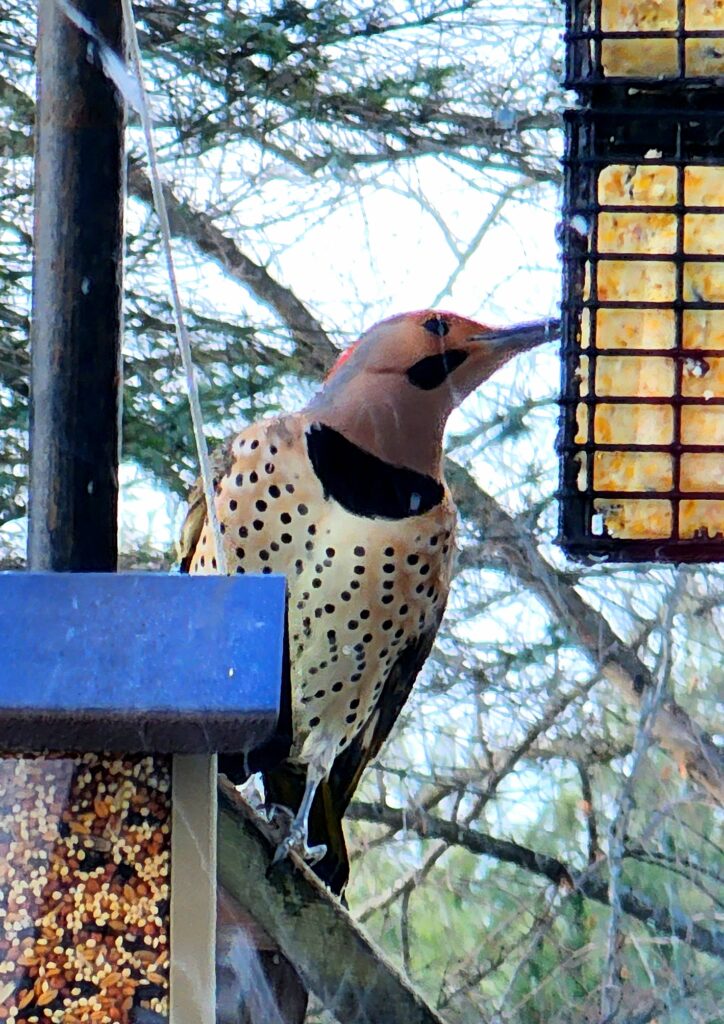
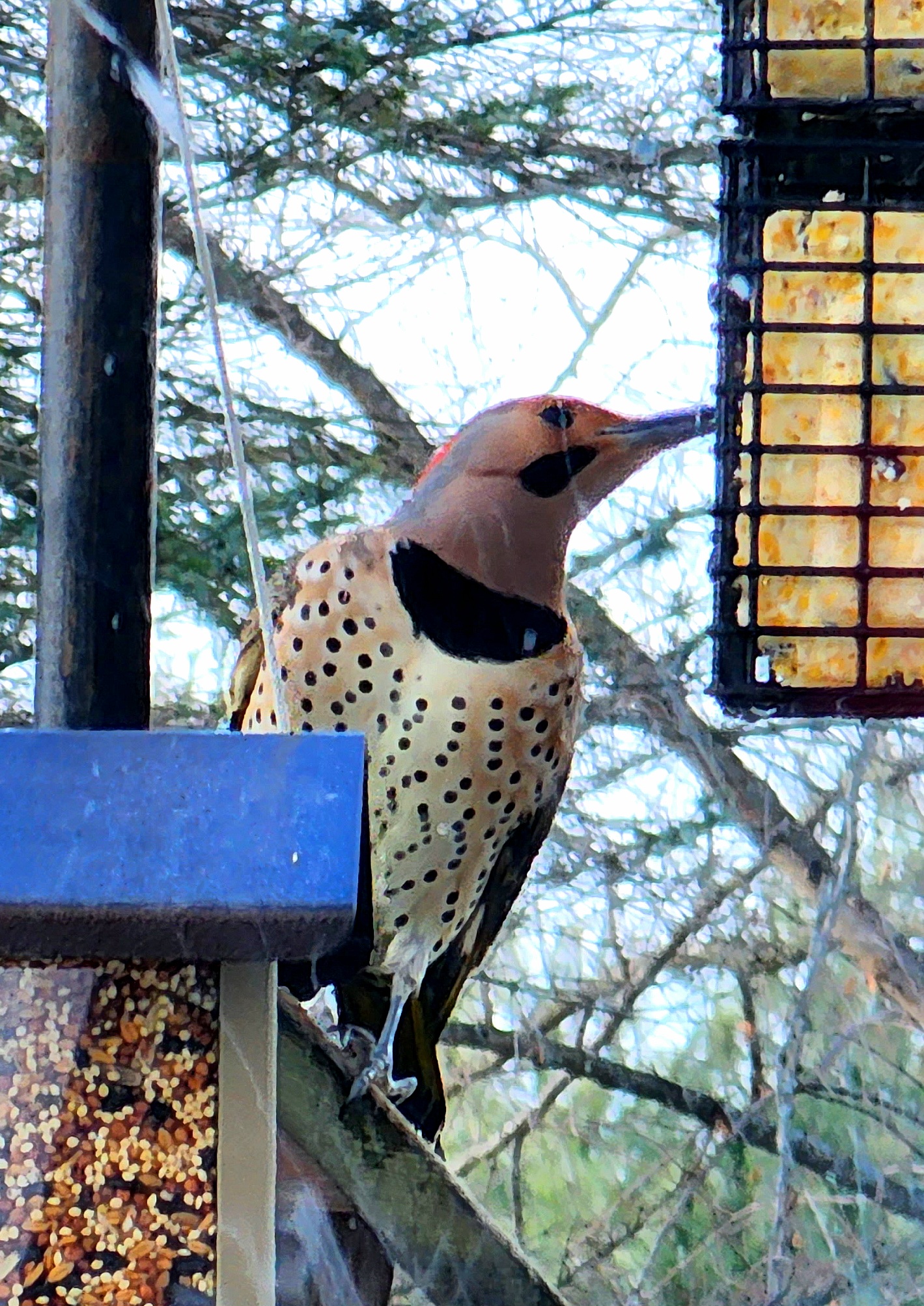
The northern flicker (Colaptes auratus), which translates to chiseler-golden, is our most colorful woodpecker and has some interesting behaviors.
As one of our larger native woodpeckers, it is 11 to 12 inches long, has a 16-to-20-inch wingspan and weighs in between 4 and 5.6 ounces. It has a distinctive color pattern of pale brown, speckled with black spots and crescents. The under wings and tail feathers are a bright golden yellow. The northern flicker also has a red spot on the back of its neck, a white rump patch, and a black crescent on its chest. In addition, the males have a black streak on either side of the bill, referred to as a “moustache.”
In early spring, you can often hear the loud drumming of the male flicker as it pounds on hollow trees or even metal to declare its territory and to attract females. Both male and female help build the nest . These are carved out in rotting tree cavities or abandoned holes can be used. They have a floor of wood chips where the flicker lays five to eight eggs, which hatch in about 12 days. The male does the bulk of the incubation. But both feed the chicks until they leave the nest after three and a half to four weeks. The chicks will live about seven years.
The northern flicker is our only woodpecker that migrates south in the winter, though it flies just far enough to find unfrozen soil.
Unlike other woodpeckers, the northern flicker is more likely to be found on the ground in lawns or other short ground cover, rather than in trees, foraging for anthills. Its preferred food is ants and other small ground insects and larvae. This makes it helpful to control crop pests such as the European corn borer larvae. It can eat up to 5,000 ants daily. Although mostly insect eaters, flickers also eat various wild fruits like poison ivy, dogwood, and sumac, and they can sometimes be seen at a suet feeder.
Fun Facts: Northern flickers have the longest tongue in the North American bird world; it stretches 2 to 4 inches beyond its bill. They also have sticky spit and tiny backward-facing hooks to capture their prey.
Flickers will spread their wings over anthills and use ants to help clean their feathers, as the ants’ acid also deters parasites.
As an avid photographer, Diane Constable regularly puts her formal education in both nature and photography to good use. Diane also enjoys gardening and her dogs. She serves on the board of the Ann Arbor Dog Training Club and is editor of the club’s newsletter.