Rural Perspectives: Shaggy mane mushroom dissolves into inky liquid as it ages
by Diane Constable
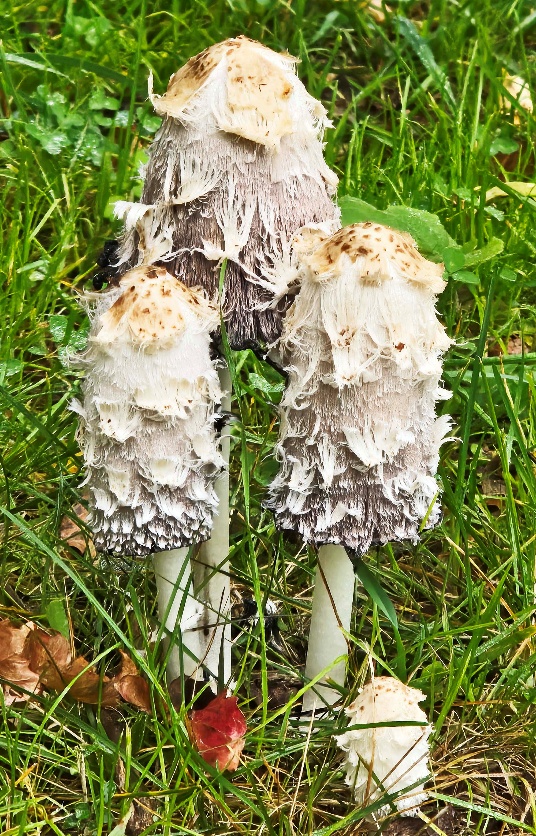
lines, or “fairy ring” circles. Photo credit Diane Constable
The shaggy mane mushroom (Coprinus comatus) is in the inky cap family. Its scientific name Coprinus means “living on dung” and comatus means “hairy.” It is also known as lawyer’s wig and shaggy ink cap.
It can be seen in the fall, growing in lawns, along dirt roads, in compost piles and disturbed areas, and on old tree roots and logs. It can grow in clumps, lines or “fairy ring” circles.
Shaggy mane mushrooms start out as small white cylinders poking out of the ground, and as they grow, they expand into long, bell-shaped caps with white scales. The cap is about 1.5 to 3 inches wide and 2 to 8 inches tall. While it ages, it becomes shaggier and blacker as it dissolves into an inky liquid that holds its spores and attracts flies. The spores stick to the flies and spread the mushroom to other locations.
These mushrooms can be eaten when prepared correctly, and within 24 hours of appearing, before they start turning black. Once this mushroom is harvested, it liquefies to black ink within hours. It has look-alike relatives that are not edible.
Many animals feed on this fungus. Flies, snails, slugs and fungus beetles nibble on it. Deer will munch on it, as do squirrels, mice, and chipmunks. Turkey and grouse also are known to peck at this mushroom.
Meanwhile underground, the mycelium (akin to roots) have tiny structures that paralyze nematodes (microscopic worms). Tiny threads digest the worm for the nitrogen needed to grow the shaggy cap above soil.
Fun fact: As a fungus, the shaggy mane cap is one of the best wood decomposers, and it recycles important nutrients back into the soil for the living plants and trees. Fungi, in general, are key in the survival of trees. There are hundreds of thousands of miles of fungal threads in all trees, which help supply them with nutrients and water.
As an avid photographer, Diane Constable regularly puts her formal education in both nature and photography to good use. Diane also enjoys gardening and her dogs. She serves on the board of the Ann Arbor Dog Training Club and is editor of the club’s newsletter.