Outreach in Action
Avoid gift card scams this holiday season—and anytime
by Jo Mayer and Paul Crandall
Outreach helps its clients primarily through in-kind contributions—sending folks home with grocery bags of food, a gently used coat, perhaps an article of furniture or a small appliance. It’s stuff that comes in thanks to the generosity of the community, and it gets into our clients’ hands mostly through the painstaking work of a big crew of volunteers.
Overwhelmingly, it is stuff that Outreach gives out. Cash, not so much. But sometimes the versatility and immediate usefulness of gift cards come into play.
When volunteer shoppers go on the hunt to augment what’s on the Outreach pantry shelves—especially for personal care items like shampoo or laundry detergent—gift cards can be very handy. And while they are not a routine tool for helping clients, emergency circumstances sometimes make gift cards a go-to solution, as in a recent house fire that left a family devastated and in need of immediate relief.
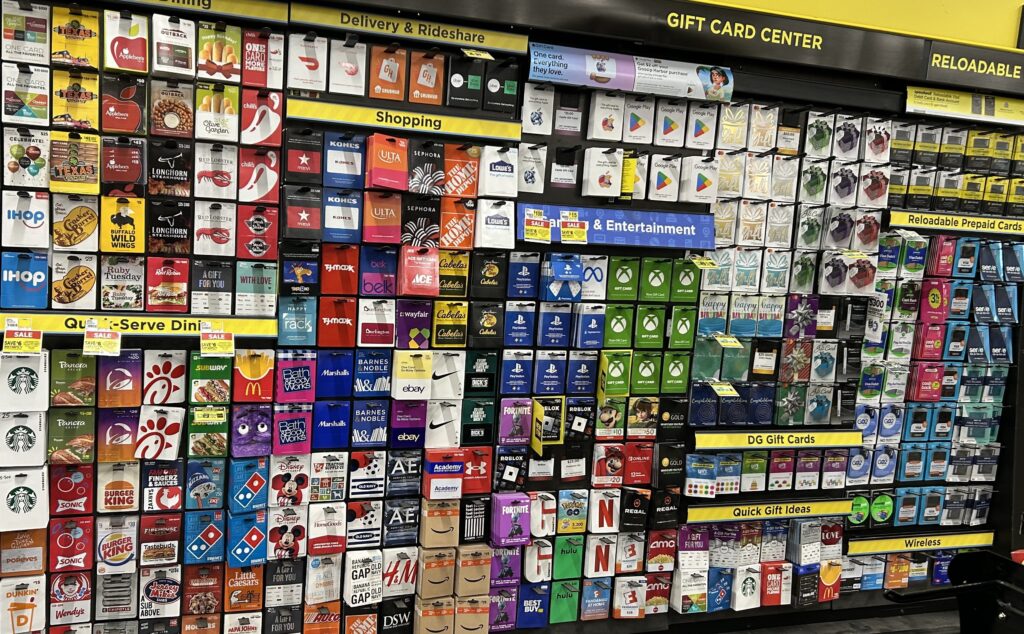
The holiday season is fertile ground for gift cards. The benefits seem obvious, but there is a downside: scams. As we move more fully into the season of giving, a closer look seems worthwhile.
Beware of scams
According to the Federal Trade Commission’s website (ftc.gov), gift card scams start with a call, text, email, or social media message. The FTC’s online article, “Avoiding and Reporting Gift Card Scams” explains that scammers will say almost anything to get you to buy gift cards—like Google Play, Apple, or Amazon cards—and then get you to hand over a card number and PIN code.
Scammers may say they’re from the government, like the IRS or the Social Security Administration, or from a utility company, or tech support. They may say they’re a friend or family member experiencing an emergency. They may say you’ve won a prize.
The FTC describes typical behavior of scammers, noting that they will stress urgency—pay them right away, they say, or something terrible will happen. Scammers may also tell you which card to buy, then ask for the gift card number and the PIN.
Scammers will try anything; they may even enlist the help of Cupid. A helpful article titled “Read This Before Buying Another Gift Card,“ from the American Association of Retired Persons at AARP.org, includes a description of romance scams: “A romantic partner you’ve bonded with online, but never met in person, may suddenly seek a loan for a supposed crisis.”
In other cases, the AARP article adds, criminals just go to a store, steal the account numbers and PINs, and reseal the cards. Then they wait for a customer to purchase and activate the card. Once funds are loaded onto the card, criminals quickly use the stolen information to make online purchases, obtain cash, or resell merchandise for a profit.
The AARP article concludes with ways to protect yourself:
- Never give gift card information to a stranger
- Purchase the card directly from the issuing business, not an online third party
- Don’t leave the store without double-checking the funds are there.
- Look for signs the gift card packaging has been tampered with or numbers and PINs are exposed.
- Keep the receipt. It may help if something goes wrong.
The FTC advises if you’ve been victimized, report the scam to the gift card company right away and ask for your money back.
“Some companies are helping stop gift card scams and might give your money back,” according to the article. “It’s worth asking.”
The FTC also asks that you tell your story to their website, ReportFraud.ftc.gov. “Every report makes a difference.”
All of this is good to keep in mind this holiday season. May your holidays be full of cheer and free of fraud!
The Outreach local food pantry, crisis, and referral center is located in the Stockbridge Activity Center (old middle school) near Cherry and Elm streets in Stockbridge. Office hours are 1-3 p.m. Monday, Wednesday and Friday and by appointment. Contact us at Outreach49285@gmail.com, 517-851-7285, or find us on Facebook.

Related Posts

CTS: Call today to schedule an appointment

Adiska Family Dental—Accepting New Patients