Outreach in Action
Spring has sprung; let the growing begin
by Jo Mayer and Paul Crandall
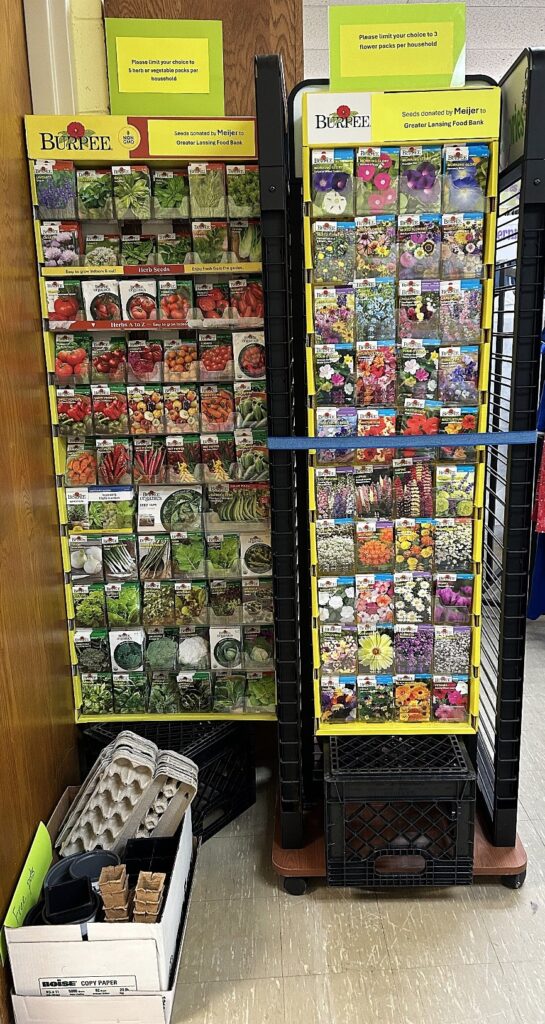
A cheery harbinger of spring appeared among the brown boxes and canned goods Outreach usually gets from the Greater Lansing Food Bank (GLFB): Seed packets! And bright yellow cardboard racks for displaying them!
Outreach volunteers sorted the hundreds of packets and rolled out the racks on March 9 inside Outreach’s free clothing room. Note: Many of the packets suggest starting the seeds indoors in March in Michigan.
The seed distribution is but one facet of the food bank’s Garden Project, an effort to get more fresh herbs and produce into the hands—and bellies—of low- to moderate-income people in its service area.
Another effort: GLFB’s Grow & Give Program, in which local gardeners dedicate a portion of their garden to growing herbs and produce for their local food pantry. The Stockbridge Community Outreach pantry welcomes gardeners interested in doing this to stop by for some seeds. Open hours are MWF, 1-3 p.m. or by appointment (Call 517-851-7285).
Planting/Harvesting tips for Grow & Give program donors
Here are some gardener tips gleaned from Greater Lansing Food Bank’s Grow & Give webpage, which is located online at greaterlansingfoodbank.org/get-help/garden-project/get-involved/grow-give .
- Plant more of fewer crops—larger quantities of a few items are easier for pantries to keep and distribute.
- Harvest during the coolest time of day, and store in a cool area out of the sun.
- Donate the food within 24 hours of harvest, if possible.
- Label less common produce, such as kale, chard, fancy greens, herbs, turnips and odd-colored squash.
What to grow and how to package for donating
For gardeners considering Grow & Give, the food bank has suggestions on what produce to grow and how to package it for donation:
- Summer squash: Refrigerate in a plastic bag until drop off. Do not wash.
- Cucumbers: Store in a perforated plastic bag in a cool spot. It’s OK to store in the fridge for a few days.
- Tomatoes & tomatillos: Do not refrigerate! These may experience loss of color, firmness and flavor if stored below 40°F.
- Hardy greens (spinach, kale, Swiss chard): Harvest the outer leaves when plants are sturdy and well established. Leave behind four to six leaves so the plant can continue to grow and produce. Consider dipping greens in cool water before bagging and refrigerate before dropping off.
- Winter squash: Harvest before frost (or before a string of cold nights below 50°F) and cure for at least a week before storage, allowing any bruises or cuts to heal.
- Onions, leeks, shallots, garlic: Cut tops after two weeks of field/bench curing before storage.
- Carrots: Trim tops to within one-half inch before storing.
Note: Be sure to store produce, herbs and greens separately from ethylene-producing crops, like apples, since exposure to ethylene can cause bitter flavors and faster ripening. Store apples in their own crisper drawer inside a loose, perforated plastic bag.
What about food safety? Can I get sued for donating food?
According to the GLFB website, people who donate food are protected under the Emerson Good Samaritan Food Donation Act. However, it is a good idea to practice safe harvesting techniques, such as cleaning hands, sterilizing harvesting equipment (clean knives and clean bags), and sterilizing kitchen surfaces. GLFB recommends 1 tsp. of bleach to 1 gallon of water for a good and simple sterilization spra). It’s also best to compost or discard fruits and vegetables that look diseased or questionable.
The best time for Outreach to receive fresh produce is on Monday mornings before open hours, but Outreach asks that gardeners call (517) 851-7285 or email (outreach49285@gmail.com) and make an appointment for when to drop off produce.
Spring is upon us—let the growing begin!

Related Posts

Faces of Addiction

Rural Perspectives: Snow buntings will be leaving our area in early spring