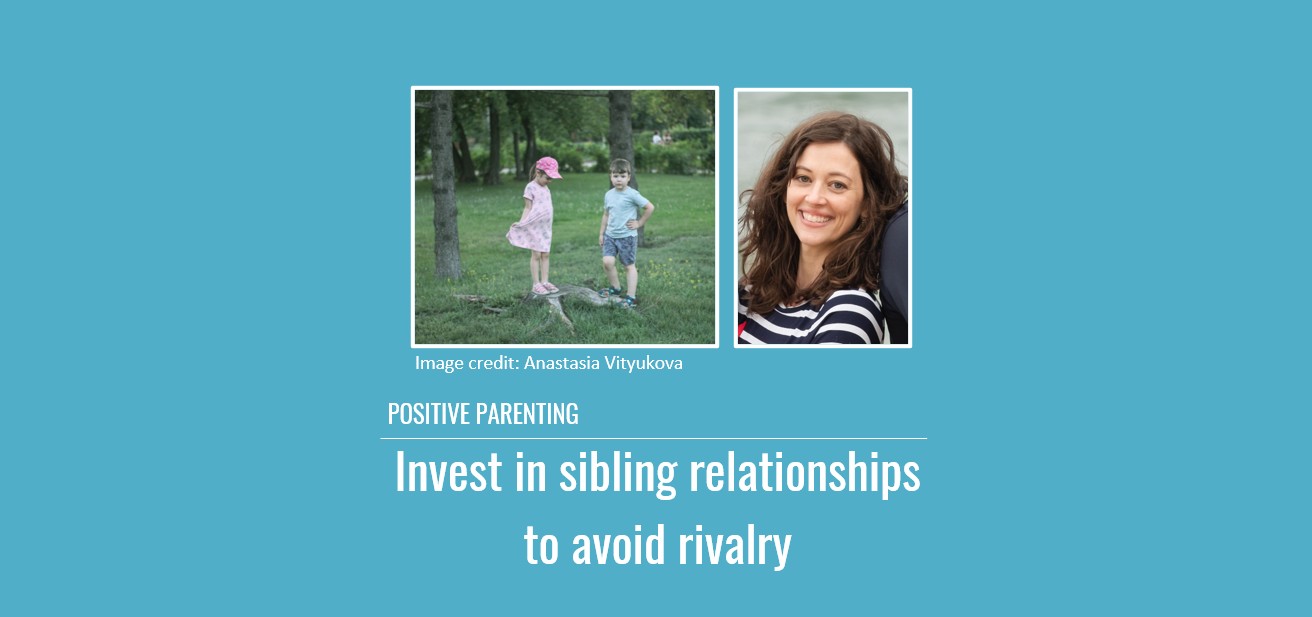
Positive Parenting: Investing in sibling relationships to avoid rivalry
by Kelsey Rasmussen
I could have been great at chess. Maybe. We’ll never know because I refused to play chess with my brother. If you always lose at something, you tend not to like it. Being three years younger, I never even had a chance.
Younger siblings—you know what I mean. You may have had the disadvantage of being smaller and less experienced. But older siblings have it tough, too. When younger siblings join the scene, they steal some of what was previously undivided parental attention. They may feel the need to compete to earn it back.
A friend recently noted the universality of sibling rivalry: “You know, it’s only the second bad act in the Bible, so you know something’s there.”
Siblings often differentiate themselves to find a way to shine. If the eldest is a great reader or mathematician, the younger siblings tend to become amazing athletes or musicians.
To paraphrase “Hold On To Your Kids,” by Gabor Maté and Gordon Neufeld, the authors explain that bad behavior is never a behavior problem; it is a relationship problem.
So how do we help our children develop lifelong friendships with each other, relationships that are likely to outlast the parent-child relationship? Google’s AI Assist helped me summarize tips for investing in sibling relationships:
- Avoid labels, comparison and competition: Refrain from labeling children or comparing them to each other. For example, replace “He’s our good reader” with “He enjoys reading and practices every day.”
- Recognize individual strengths: Name each child’s unique strengths to build their self-esteem. Compare these to his/her previous performance rather than to a sibling. For example, “You’ve been getting faster and more confident riding on the pump track.”
- Spend quality one-on-one time: Spending time with each child individually strengthens parent-child bonds and offers predictability in being the center of attention. For example, make a different routine with each child as simple as getting the mail every day, riding bikes or walking the yard when the weather is nice.
- Teach conflict resolution: Encourage children to express feelings using “I messages” and negotiate solutions together. For example, “I felt surprised to hear you speaking like that to each other. We want to help each other in our family, never hurt each other. Were you trying to say you weren’t ready to share yet?”
- Avoid taking sides: Instead, guide them to find mutual solutions. For example, “I notice your sister is frowning and hiding under the table. How do you feel about what happened? How might you two make this right?”
- Encourage teamwork: Create opportunities for siblings to work together on projects to foster cooperation. For example, cook/bake, garden, do a puzzle, build something or play collaborative outdoor games together.
- Model positive behavior: Demonstrate healthy repair and communication in your own interactions. For example, take a deep breath and count to 10 when you’re frustrated, and give/accept apologies when necessary.
Emily Buelow, a local mother of six, event planner and substitute teacher at Smith Elementary, has had lots of practice navigating sibling rivalry.
“On good days when I am rested and feel like I can ‘mom,’ I have the siblings who are disputing stop, take a deep breath, and explain their side so the other can hear where they are coming from. Afterward, the other sibling tells their side and we discuss calmly how we can settle the disagreement. But on days when ‘mom’ has nothing left and I’ve already taught them the skills, I say, ‘I’m not the ref. Figure it out.’”
Activity Highlight
Plan a flower, herb or vegetable garden together. Discuss and select something each person likes that he/she will be responsible for. Plant the seeds this month, fertilize the seedlings in April, and transplant outdoors mid-May. Enjoy the harvest all summer long!