Reading Between the Lines
‘The Frozen River’ is part history and part mystery; a great addition for your ‘to be read’ pile
by Mary Jo David
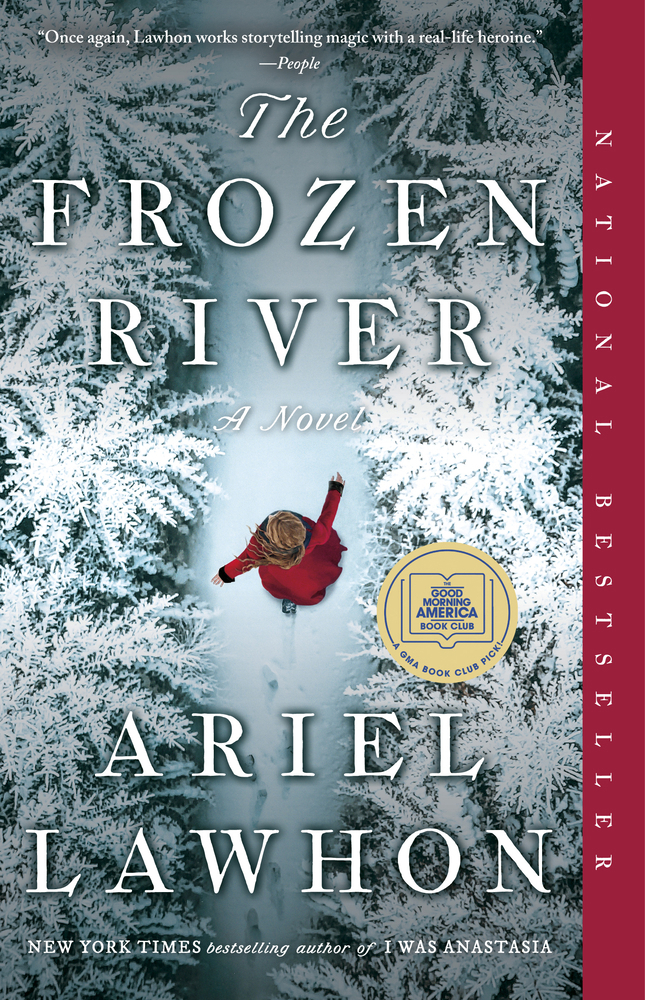
I admit to being hesitant when I selected “The Frozen River” as my next new read. I don’t know whether to blame reader apathy on my part or overhyping by book clubs and book reviewers for the disappointment I’ve experienced with the last couple of popular fiction books I’ve read. Even so, I decided “The Frozen River” would be worth a try.
As it happens, my concerns were unfounded. In “The Frozen River,” author Ariel Lawhon checked all the boxes in writing a book that would genuinely appeal to me: a historical setting, compelling characters, an intriguing mystery, and overall, an engaging story.
It’s easy to miss that this book is loosely based on a real person—Marth Ballard—a midwife in America in the decade following the start of the Revolutionary War. This nugget is very understated on the book’s cover. The book begins when Martha is in her mid-50s and has delivered hundreds of babies over her 30-plus years as a midwife. In general, she’s well respected, if not quite loved, in the town of Hallowell, Maine. Fun fact: Maine is really a district and not yet a state when this story takes place.
A lot happens in a relatively short time—about six months from beginning to end. A man’s body is found frozen in the Kennebec River, and Martha is the first person with any medical background who is called upon to examine the body. Her finding of murder is refuted by a young, upstart Harvard-trained doctor, but Martha can’t let it go. Over the next 400 pages, the reader is treated to glimpses of Martha’s family life, her experiences delivering babies and treating medical issues, occasional flashbacks to her life as a young woman, and her stubbornness as she attempts to prove the murder actually happened.
I found it rather amazing that Lawhon could write a story that, on the one hand, had me thinking of Martha as a contemporary, someone I’d hope to be friends with if we were living in the same small town today. On the other hand, I was reminded that she was actually living in a very different time. Unlike many women in the late 19th century, Martha could read, but only because her husband taught her after they were married. She traveled everywhere by horse (a stubborn one, at that) and delivered women of their babies—many with unforeseen complications—without the benefit of all that modern medicine has to offer.
Following along as Martha morphed, almost daily, from loving wife to concerned mother to attentive midwife, to irascible neighbor (but only when her abilities were challenged), keeps the reader attentive and interested. And you can’t help being charmed by Martha’s husband, Ephraim, and the unwavering love and respect they share.
If I found one fault with the book, it was that it was tough keeping track of all of the characters since she interacted with so many over the course of the story. The book provides a simple map showing the settlements on both sides of the Kennebec River, but I contend a Who’s Who list would have been more useful.
The story is rooted in time. Like her recurrent diary entries, each section of the story and each chapter is date stamped. I found it intriguing that, although the story begins about six years after the Revolutionary War ended, the townsfolk of Hallowell seemed to be much more impacted by the French and Indian War, which predated the Revolutionary War by about 20 years. That said, it was also interesting to read about the court system that was in place at the time, when the U.S. Constitution was in its infancy and prior to the establishment of the Bill of Rights in 1791.
The imagery Lawhon conveys throughout “The Frozen River” is primitive, touching, and everything in between, as illustrated by the following passages.
“The contrast of ham hocks dangling from the ceiling and the body sprawled on the table sends a shiver along my spine. … I take a long breath through my nose, noting scents of lamp oil, onions, and salt, but no blood, no rot, no vomit…”
“It is hard to have an oldest child, but harder still to have a youngest. … Like all mothers, I have long since mastered the art of nursing joy at one breast and grief at the other.”
It bears mentioning that “The Frozen River” is one of only a couple of books in which I’ve enjoyed reading the Author’s Notes at the end as much as I enjoyed reading the story itself, but wait to read these notes until you are done reading the book.
Overall, I’d award 4.5 stars to “The Frozen River”—a story that is part mystery and part history. Upon finishing the book. you may even find yourself asking how far have women really come since the founding of this great country.