Reading Between the Lines: In ‘Shelterwood,’ alternating timelines eventually lead to a satisfying conclusion
by Mary Jo David
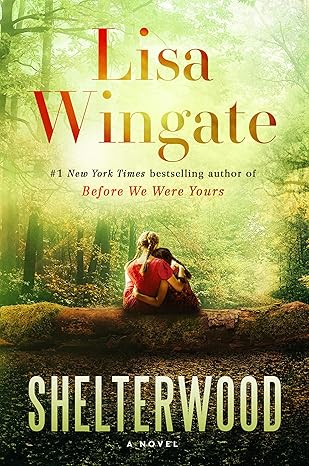
Shelterwood was picked for me. That is to say, upon agreeing to lead the next month’s book club discussion, I thought it best to read the book first!
Although I was familiar with author Lisa Wingate, I was not aware of this particular book in her list of works. In fact, I had only read one previous title by Wingate, and that was “Before We Were Yours.” While my recollections of that book had become fuzzy over time, I remembered enough to look forward to reading another of Wingate’s books.
My first inclination is to assign “Shelterwood” a genre of historical fiction, yet I am also inclined to think of it as more of a modern-day mystery. That’s because, in true Wingate fashion, the book was written with alternating timelines—regularly shifting between occurrences that took place in 1909 and those that happened in 1990. My frustration with this nonlinear approach caused me to research “Shelterwood” reviews to see how other readers felt about being transported—chapter by chapter—back and forth through time. My nonscientific survey determined that I wasn’t the only one frustrated with the jarring time changes. But like me, many of the reviewers ultimately succumbed to the style and continued reading. And those who did generally awarded the book with four stars.
Two things became obvious to me as I was reading “Shelterwood”: I knew next to nothing about Oklahoma’s statehood and geography, and the tiny bit I knew about the Osage Nation and how these people were used for their oil rights could fill a thimble. I credit Wingate with doing a thorough job researching the book, so that in the end, I came away feeling much more knowledgeable about Oklahoma and the Osage.
“Shelterwood” focuses on two different women—Valerie Boren-Odell (or “Val”), a modern-day National Park Service law enforcement ranger, and Olive Augusta Peele (or “Ollie Auggie Radley”), a precocious, bordering on high-handed, 11-year-old whose world fell apart when her father disappeared and her mother remarried.
When the bones of young children are found in a cave in a soon-to-be-opened national park in Oklahoma’s Winding Stair Mountains, Boren-Odell is driven to try and solve the mystery against all odds. While readers can certainly sympathize with Boren-Odell’s challenges, I’m inclined to believe that more are invested in the struggles of Ollie Auggie and the small band of orphans she is trying to save. Considering that each chapter ends with something akin to a cliffhanger, that adds up to a lot of challenges and struggles.
One common thread woven throughout all the chapters in “Shelterwood,” is that every chapter begins with an excerpt from a variety of actual historical references like congressional hearings, meetings, and articles centered on what was happening to children who were at the mercy of the land barons in Oklahoma in the early 1900s.
Reading about injustice is hard. Reading about injustice as it pertains to young children is even harder. The trick is to make yourself stay with the story long enough so that slowly but surely all the pieces start to come together. In that respect, Wingate doesn’t disappoint.