Rural Perspectives
Puffballs grow differently than mushrooms
by Diane Constable
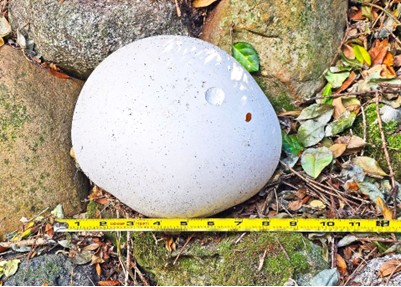
The giant puffball (Calvatia gigantea) is one of our largest fungi. This easily identifiable giant mushroom grows in fields and forests in late summer into fall.
It grows quickly, usually after a rain, to be about the size of a soccer ball. On average, it grows up to a foot across. The largest one found weighed in at nearly 50 pounds!
It doesn’t have a root per se but a thin cord called a mycelium. This connects the puffball to its food source, such as a rotting tree root, dead grass or leaves, or other organic material, helping recycle the nutrients of the dead plant material back into the soil.
Puffballs grow differently than most mushrooms, all the spores form and develop inside the body of the fungi. As the 7 trillion spores mature, the outside of the puffball will turn light brown to a darker brown signaling that the spores are ripening. At this point, when the puffball is disturbed, it will easily crack open and release the spores in a puff of dust. It is so fragile even a raindrop will cause it to break apart.
A puffball is edible, but care must be taken to determine 1) it is indeed a giant puffball, and 2) it isn’t too old. Once its bright white color starts to fade and turn brown, it is not OK to eat. Deer, rabbits, squirrels, raccoons, and even box turtles like to eat these puffballs.
The Native Americans used the spores for various things, such as to stop bleeding and prevent infections. Early Americans would burn the spores to create a smoke that would make bees sleepy in order to collect the bee honey.
In the mid 1800s, this smoke also was studied as a potential anesthesia for surgery. The spores have been found to have antibacterial, antifungal, and antimicrobial properties and can fight some infections nearly as well as modern antibiotics. A study in the 1960s showed that the spores may have some cancer-inhibiting effects.
Fun facts: The oldest fossil of a puffball was found in Mexico and is believed to be 22 million to 26 million years old. The giant puffball also produces more spores than almost any other species on Earth.

As an avid photographer, Diane Constable regularly puts her formal education in both nature and photography to good use. Diane also enjoys gardening and her dogs. She serves on the board of the Ann Arbor Dog Training Club and is editor of the club’s newsletter.