Rural Perspectives: Found mostly year round, common song sparrows are quite melodious
by Diane Constable
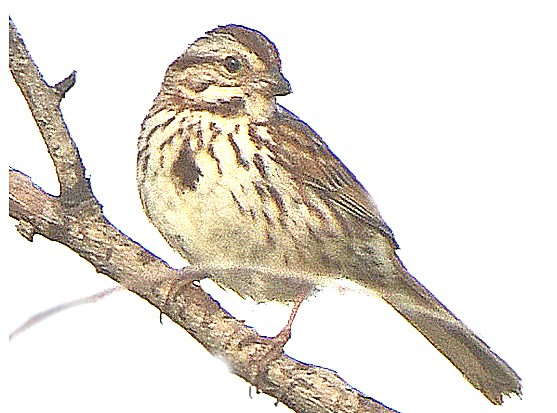
The song sparrow (Melospiza melodia) is our most common native sparrow—and most vocal. Its scientific name is ancient Greek for “song finch, melodious.” This sparrow is found throughout the country—with some variations in appearance—in more than 30 known subspecies across North America. Those in our area have a streaky breast with a notable dark spot in the center. They also have a dark russet-colored stripe behind their eyes and two on the “cap” of their head.
Song sparrows are mostly year-round residents but may go a bit south during hard winters. They are often seen at bird feeders and also feed on the ground by walking around kicking backward through the vegetation to uncover food. Like most sparrows, they eat a wide variety of food. In winter, they eat seeds such as ragweed, clover, buckwheat and sunflower. In warmer weather, they like small fruits and insects, spiders, snails and worms.
Come spring, the males can be seen and heard singing with head thrown back near the top of small trees and shrubs. They can have more than 20 songs, and the female can recognize its mate’s song from the others. They all can recognize the slight variations of their neighbors’ songs.
The nests are found on the ground and up to 15 feet high, in grasses, flowers, shrubs and trees, sometimes close to houses. The female builds the 4-to-8-inch nest made of grasses and fur. She lays up to six eggs, with two to three broods per year. The blue-green eggs hatch in about two weeks. Ten days later, the chicks leave the nest, although the parents keep a close eye on them for another three weeks until they can take care of themselves. Song sparrows will grow to be 5 to 6.5 inches with a wingspan between 7 and 9 inches, and weigh a whopping 1 to 2 ounces. They can live up to 11 years.
Fun Fact: Song sparrows living close to humans can become very friendly and have been known to be trained to come to bird feeders at the ring of a bell.

As an avid photographer, Diane Constable regularly puts her formal education in both nature and photography to good use. Diane also enjoys gardening and her dogs. She serves on the board of the Ann Arbor Dog Training Club and is editor of the club’s newsletter.