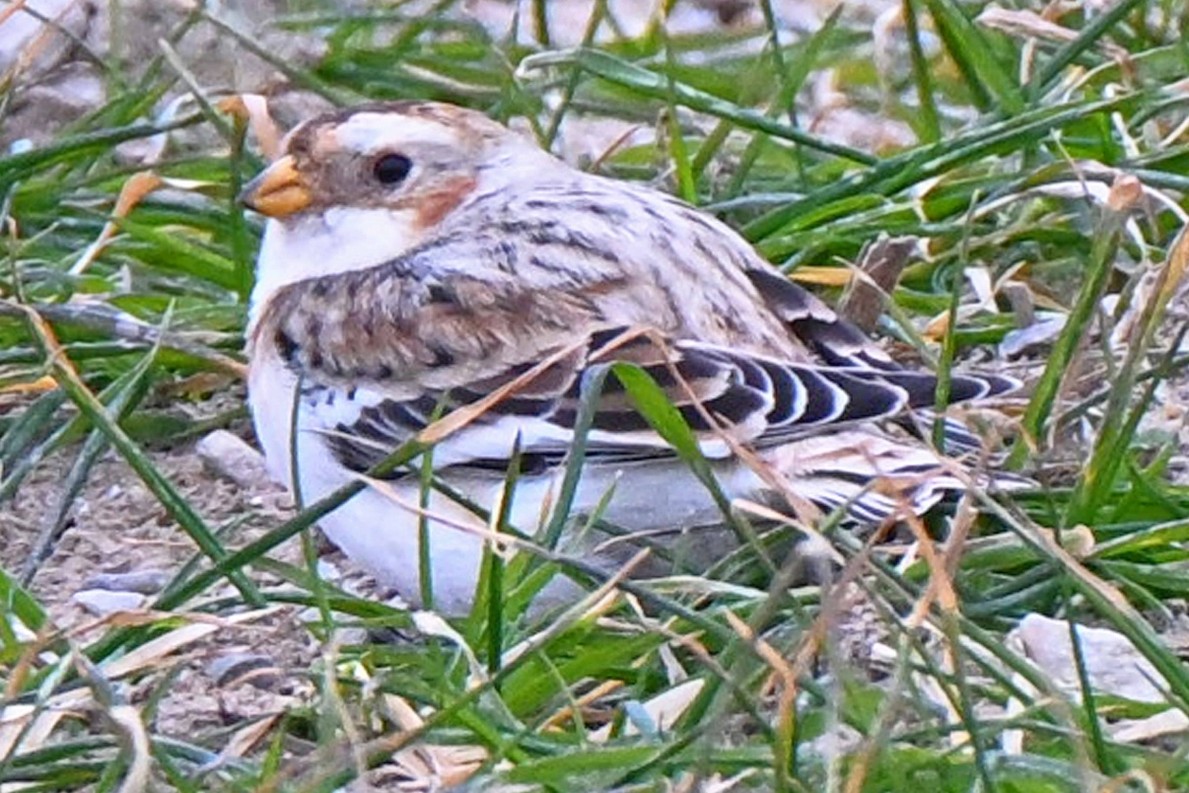
Rural Perspectives: Snow buntings will be leaving our area in early spring
by Diane Constable
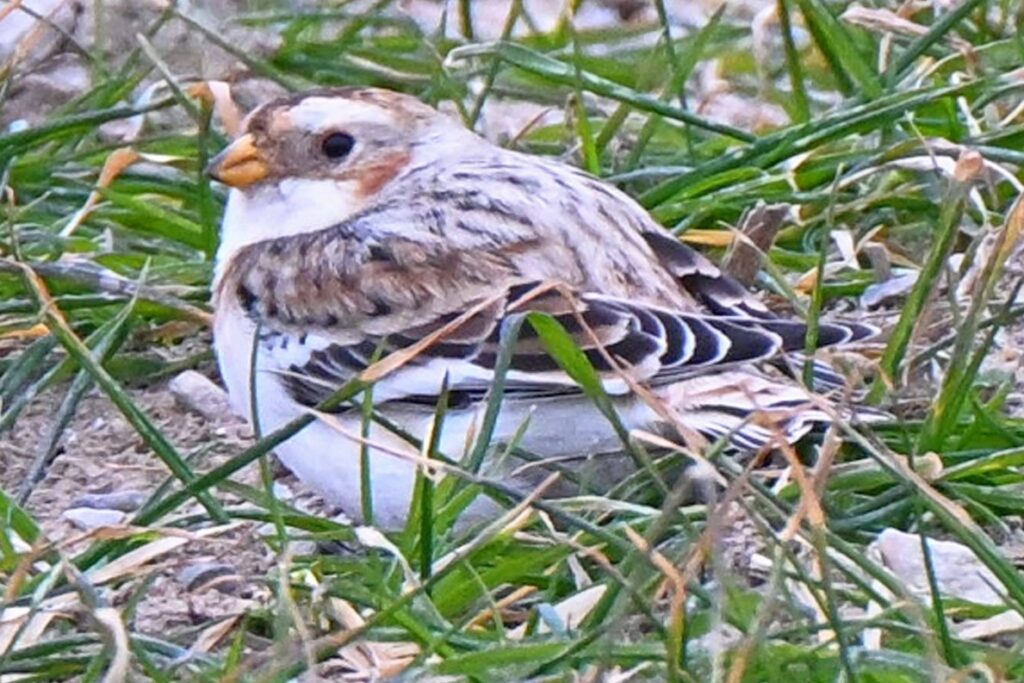
the brown and black markings on its wings and back. Photo credit Diane Constable
The snow bunting (Plectrophenax nivalis) is found on our local farm fields only during the winter months. The first part of its scientific name is Greek and refers to its long, straight, hind claw; the second part is Latin for snow white. The word “bunting” comes from Old English and refers to this bird’s thick feathering.
Snow buntings have a white chest and belly, with brown and black markings on the wings and back enabling them to blend in with the winter fields. They are sometimes called “snowflakes” because the flocks whirl around like snowflakes as they search the snowy fields for seeds. They use their sense of smell to find weed seeds (eating up to 300 per day) under the snow or along the roadsides. They often sleep within snowbanks where it can be 20 degrees warmer than the air temperature.
The snow buntings arrive in our area in late fall, and in early spring they leave to migrate back to their breeding grounds in the High Arctic.
The males leave first, migrating at night using the Earth’s magnetic fields to navigate to the northern Arctic tundra, farther north than most birds. About four weeks later, the females follow. The female makes an open cup nest of moss and grasses far back in a rock hole or crevice. The female sits on the eggs to keep them warm while the male keeps her well-fed. The three to seven brown-spotted white eggs hatch in about two weeks. The newly hatched birds will be able to fly in another two weeks and will live up to nine years. Both parents feed the nestlings.
These tough birds will grow to about 6 inches long, weigh a bit over an ounce, and will be able to withstand minus-40-degree temperatures. During the Arctic summer, the snow buntings eat seeds, insects, and spiders as they walk, hop, and run along the ground.
Fun Fact: The male doesn’t have a true molt. But it will rub its head and belly on the snow to wear away the brown tips of its feathers to show its summer breeding plumage, which is overall snow-white with black markings.

As an avid photographer, Diane Constable regularly puts her formal education in both nature and photography to good use. Diane also enjoys gardening and her dogs. She serves on the board of the Ann Arbor Dog Training Club and is editor of the club’s newsletter.

Related Posts

ABBOTT & FILLMORE AGENCY—FULL SERVICE SINCE 1946

Reading Between the Lines