

Women of Note: German war bride Charlotte Camp found a new life in Stockbridge
by Tina Cole-Mullins
Some may recall the late Charlotte (Cyrus Tillack) Camp as an award-winning journalist and one-time owner of the Stockbridge Town Crier. Others may remember her as a devout mother who was a Cub Scout den mother, PTA and Band Boosters president, choir director and Sunday school teacher.
But few may know the whole story of the courageous German woman who grew up in Nazi Germany and became a young widow with an infant son. Then she found love again and came to America as a war bride, eventually settling in the small town of Stockbridge. It is a story so compelling it could fill the pages of a book, or perhaps become a movie screenplay.
“Not only was mother feisty in spirit, but also very determined, ” her eldest son Axel (Tillack) Camp said. “Most of all, she adapted and was a survivor.”
The early years
Charlotte Cyrus was born March 4, 1923, in Gleiwitz, Germany (now part of Poland), the daughter of a respected educator.
At the age of 19, Charlotte was drafted into service for Hermann Goring’s Luftwaffe (German Air Force). She served just more than a year as a teletype operator before being honorably discharged. During her service, she met and married Lt. Otto Tillack, a radio operator for a night fighter squadron in the Luftwaffe.
In February 1944, Axel (Tillack) Camp was born to the young couple at Neu-Welzow Air Base, Germany, where Otto was stationed. A photo of the new young family was captioned in German: “Three happy People.”
But only two months later, the young mother became a widow after her husband’s plane was shot down southeast of Berlin.
An obituary excerpt written by a Charlotte read: “Otto Tillack at the age of 29. After 5 years of service he died in April fighting against the enemy. In deep pain: Charl, Tillack, Cyrus, and son Axel.”
On her own
The young widow now found herself far from home, on her own with a 2-month-old son. Her eventual reprieve to Gleiwitz was short-lived and her family was not there to meet her.
While she was on assignment, things for the Cyrus family had taken a turn for the worse. Josep Cyrus, Charlotte’s father, lost his prominent title as rektor. He was transferred away to a country school as punishment for his involvement in the German Underground (a known adversary to Hitler).
With the advancement of Russian troops into her hometown, Charlotte had no time to locate her family. She managed to secure placement for herself and her son on an evacuation train. It moved from town to town for weeks before reaching its destination in Linz, Austria.
“She was fearless, she never backed down,” youngest son David said.
Although a mere child, Axel carries snippets of memories from this traumatic time – whizzing bullets, the sound of bombs and an apocalyptic landscape surrounding him.
“I recall my mother hiding me under her dress from unknown dangers as we moved from refugee camp to refugee camp,” Axel said. “I don’t know how she managed to do it, all alone with me.”
War bride
Settling in Austria and registering as a displaced person, things grew calmer for the young mother as she sought asylum. She was able to gain work at the American embassy as a secretary in Linz.
“No doubt mother speaking German, Polish, French, English and degree of formal education helped gain her position,” her daughter Faye Wood said.
It was not long before Charlotte Tillack met young Staff Sgt. Robert Camp of the American Occupation. They married the following October, making her a German war bride. The newlywed Charlotte and son Axel remained in Linz for a short time until Camp’s deployment overseas ended, sending the young couple stateside.
They arrived in New York harbor on a cold, misty November morning, processing through Ellis Island and then settling in Chicago.
“Mom was scared a lot in the beginning, it was a big adjustment for her,” Alex said. “The sounds of sirens and tornado drills frightened her for a long time. While we lived in Illinois, my sister Ruth was born.”
Settling in Stockbridge
The military family left Illinois after Camp’s discharge in 1949 and went to live in his hometown of Stockbridge, Michigan.
Charlotte wrote about this time in her life in this excerpt from the Jackson Citizen Patriot:
“Our arrival in the small village of Stockbridge, the hometown and birthplace of my husband, presented a great challenge. This brings to mind the day, when my husband and I went for a walk so that he could show me his town, a slight movement of curtains at the windows. Closer inspection proved, however, that the movement was not imaginary, but caused by some curious people who wanted to get a peek at what the local soldier had brought back from Europe. The experience made me somewhat frightened and it was weeks before I would venture out of the house alone let alone go to the store or anywhere where there would be people.”
But overcome those fears she did, buying an encyclopedia set to explore her new first language. Charlotte tackled this position with graceful determination as she raised her growing family.
Charlotte opted to be a homemaker and mother, taking an active role in her children’s lives though numerous volunteer positions. A choice, no doubt, Charlotte made as a young woman who was in the midst of navigating a new home and a completely different way of life.
“Mother was feisty in spirit, yet at times could be very reserved,” her youngest daughter Faye Wood said.
A working journalist
Once her four children were in school, Charlotte began to look outside her domestic role as wife and mother. However, she decided work must allow her to see her children off to school and back home again.
With her formal education and background, writing seemed appealing. Charlotte started writing articles for the Ingham County News and as a special contributor to the Jackson Citizen Patriot and Detroit News. It led her to the desk of Jim Brown, co-owner of the Ingham County News in the 1960s.
In 1967, the opportunity arose for Charlotte to acquire the Brief Sun, Stockbridge’s floundering local newspaper. With a firm belief that Stockbridge needed a locally produced newspaper, she approached her employer Jim Brown, suggesting that he buy the Brief Sun. He did, but only under the agreement that Charlotte would become the editor. She agreed and the Stockbridge Town Crier was founded. Within two years, Charlotte gained sole proprietorship of the newspaper.
“She had tenacity; she was tough and steadfast,” Ruth (Camp) Wellman said of her mother. Wellman worked with her mother and followed her as owner-publisher of the Town Crier.
During her career, Charlotte received numerous accolades and honors through the Michigan Press Association. The Town Crier also garnered an “Award of Excellence.” In 1971, Charlotte was named a “Foremost Woman in Communication” in a biographical reference work on accomplished women in the world of publication.
Lasting legacy
Charlotte Cyrus-Tillack Camp was laid to rest, her husband and children saying their farewell, on March 3, 1996. Less then six weeks later, her American soldier and loving husband Robert Camp was laid to rest beside her in Oaklawn Cemetery in Stockbridge.
Honoring Charlotte’s legacy, her children provided startup funds for the Stockbridge Community News. Their generous donation at the platinum level from the Charlotte and Robert Camp Memorial Endowment Fund helped return a local newspaper to the area.
Author’s Note: Information retrieved from the personal records and estate of Charlotte (Cyrus Tillack) Camp, through her children.
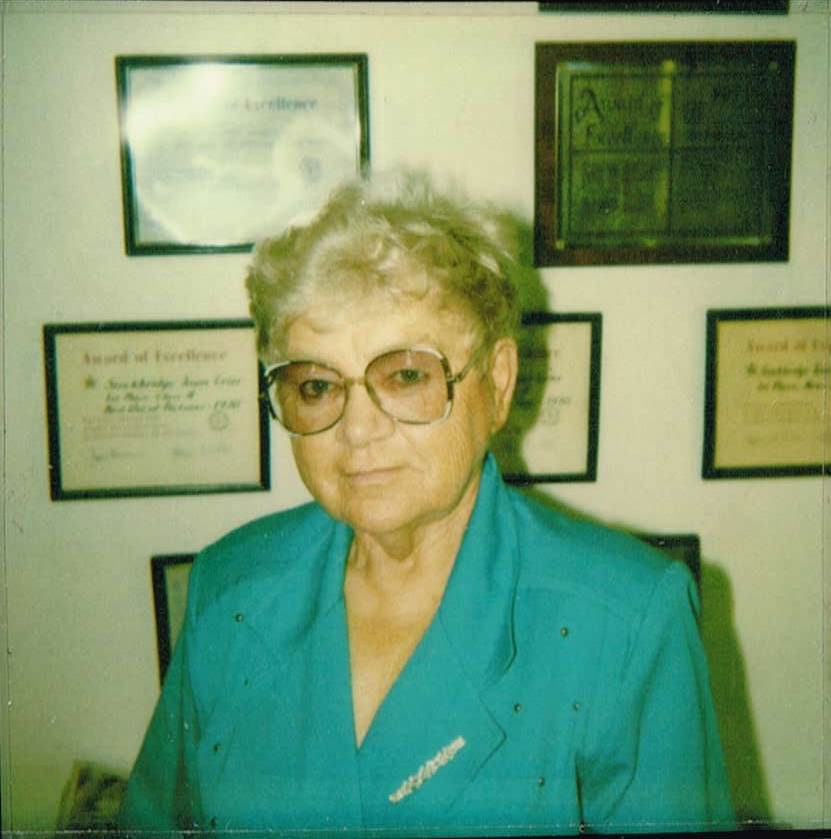
Charlotte Camp – Numerous accolades and honors adorn her office wall

Translation (Three happy People) Charl, Axel and Otto Tillack 1944
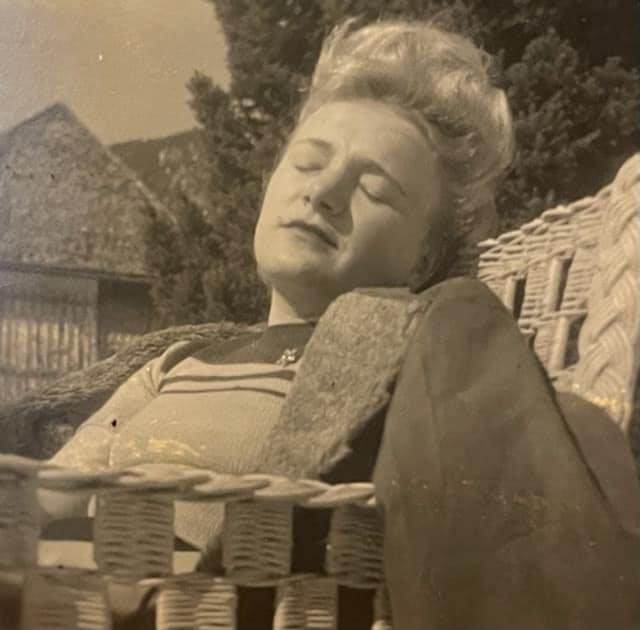
Charlotte Tillack in Austria or Germany – Enjoying a moment of sunshine
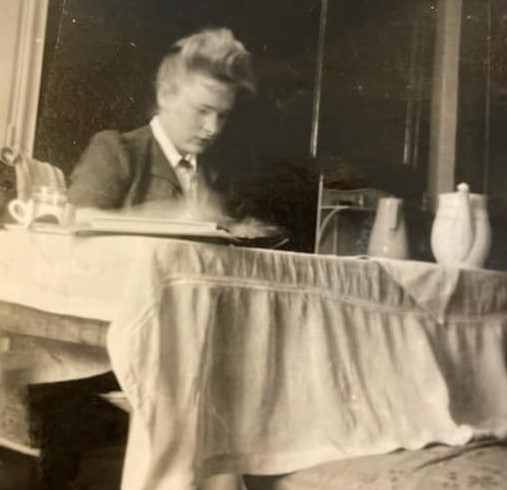
Charlotte Tillack in Austria 1948 – Focused at task on hand
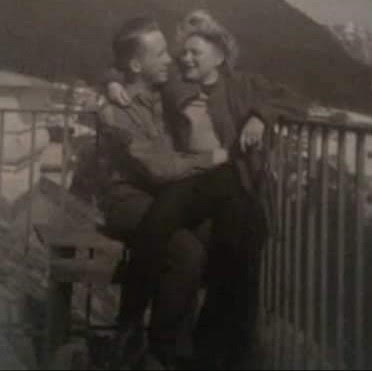
Robert & Charlotte in Austria 1948

Robert & Charlotte Camp in Austria 1948
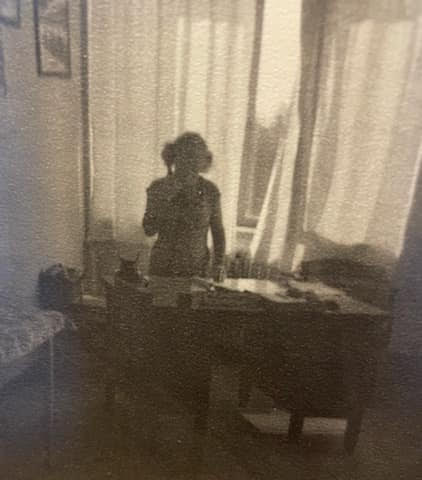
Charlotte – as she works one phase of her careers
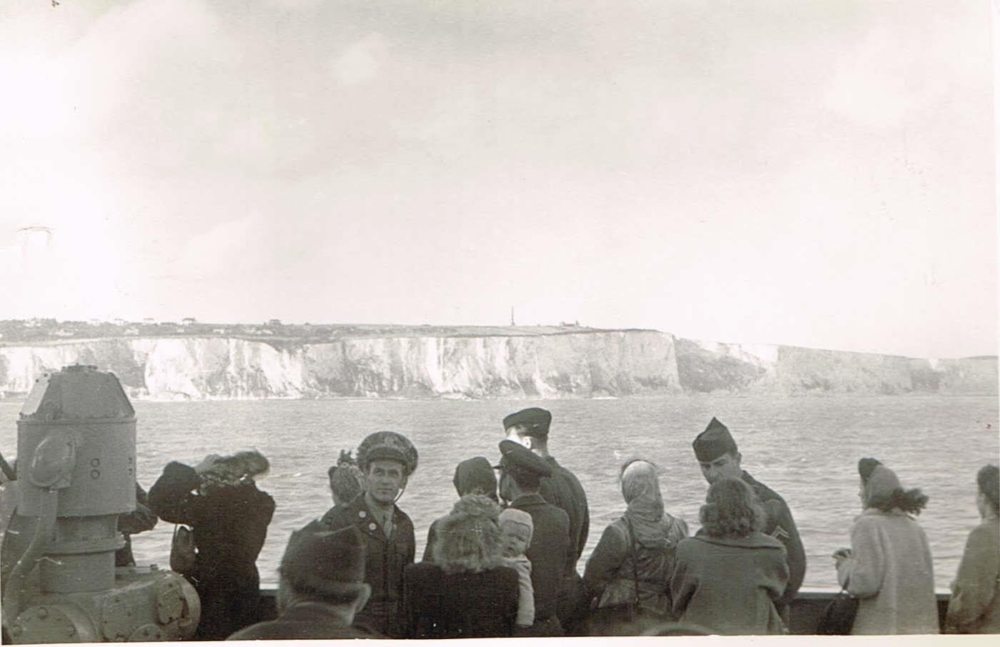
Photo Credit: Robert Camp White Cliffs of Dover, UK – Return trip to the states November 1948
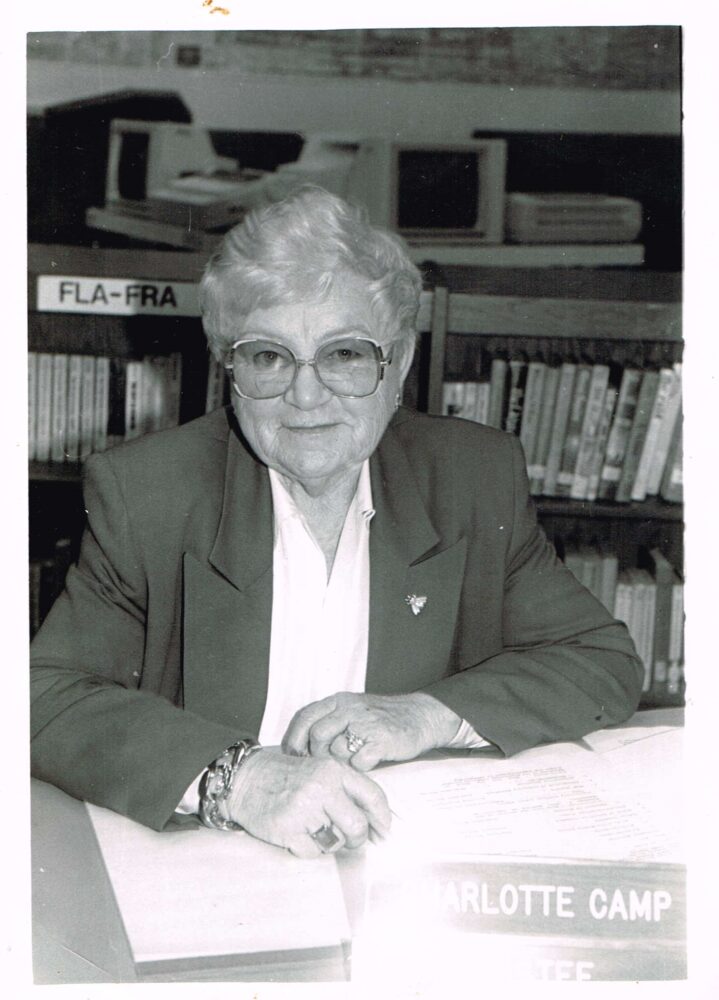
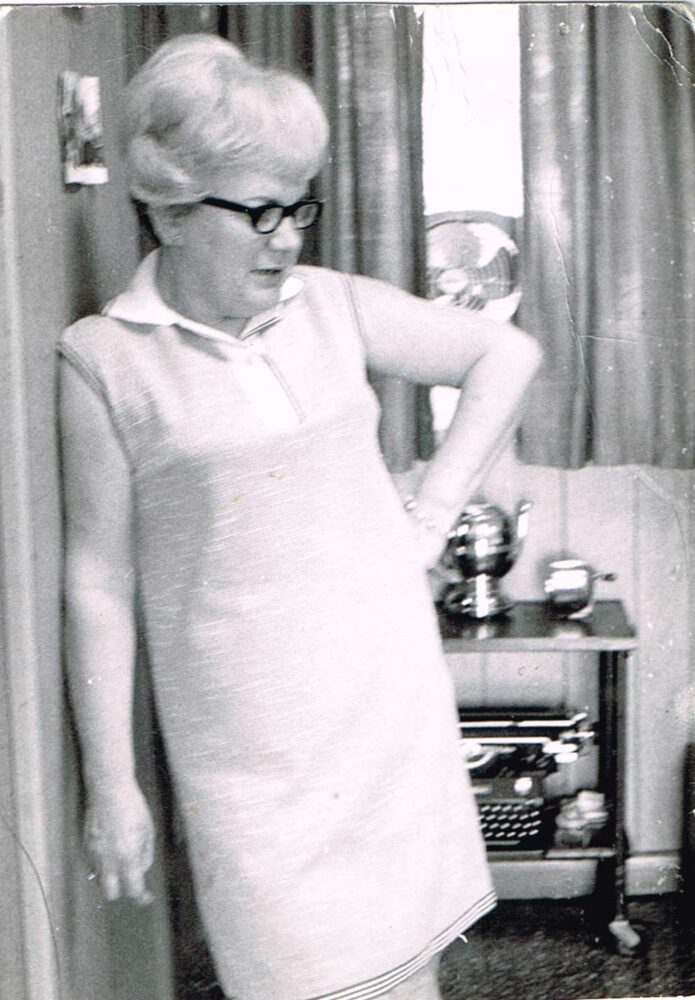
Charlotte Camp in the Stockbridge Town Crier Office 1969
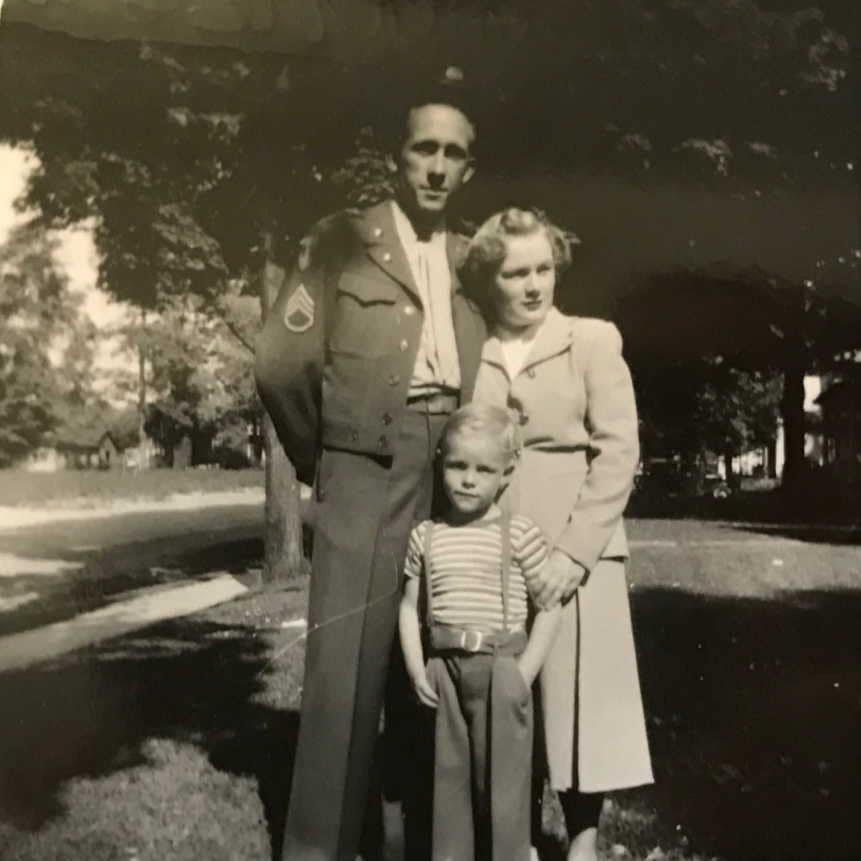
Robert, Charlotte & Axel Camp – Main St. Stockbridge, Michigan 1949

Charlotte, Robert, Axel, Ruth and Faye Camp 1957
7 thoughts on “Women of Note: German war bride Charlotte Camp found a new life in Stockbridge”
Comments are closed.




Mrs Camp and my Mother were friends when I was young. We moved to town approximately the same time and they both shared the life experience of escaping Germany.
Enjoyed the lady, as I carried her groceries out at Felpausch. I learned she had a real sense of humor. Could be a little dry, and I remember doing a double take a few times. Looking back, I think she had a twinkle in her eye each time.
This story is about my grandmother. Thank you for writing and publishing it. She was a strong resilient woman who continues to be a huge inspiration to me and hopefully others, long after her passing.
Laura it has/is an honor to be working on this story. I would love to speak with you more, as I have other projects I would like to explore as well as do a piece on your grandfather for Veterans day. Please contact me directly at Tcolemullins@gmail.com or on Facebook Tina Cole-Mullins.
What a lovely tribute to a remarkable woman. I remember her well. She set an example for young girls in Stockbridge to stretch beyond the limited roles for women in the 1960s. Thank you for writing this piece. My family knew her well as the Camps lived across the street from my grandmother, and my father san in the Methodist choir with her for years. But I didn’t know her early history, which makes her life even more extraordinary. I remember being at Caskey Funeral Home during visitation for an elderly relation. I stood looking down at the dead body in the casket when a voice next to me whispered in my ear, “I don’t know why they always say they look so good. They look dead.” I turned to see Charlotte slyly smiling at me. I was grateful that at least one adult my thoughts exactly.
Patricia,
Thank you very much for you kind words. What an amazing woman she was. I had slotted this article a year ago when I did one on Charlotte’s daughter Ruth. I was unaware at that time, what an amazing story I would be revealing in my research I started late January. Research beyond the general info I had from local records etc.
From a general google search of her maiden name I came up with 2 photos and no doubt both were of Charlotte, but for sure the men were different as were their military uniforms. It was at that time and speaking with Ruth she suggest I speak with her oldest brother Alex (known to many) but referred to in this article by his given name of Axel.
I can so appreciate your comment about the funeral and the sly look upon her face, as I just wrote in another excerpt on her view of obituaries and I quote “You pick up small papers; when somebody dies they write, “Now he walks with God.” That makes me sick.”
I will be continuing my exploration and research on Charlotte and planning a Vetran’s day piece on Robert which of course will include some of her story.
Thanks Again,
Tina
Patricia,
Thank you very much for you kind words. What an amazing woman she was. I had slotted this article a year ago when I did one on Charlotte’s daughter Ruth. I was unaware at that time, what an amazing story I would be revealing in my research I started late January. Research beyond the general info I had from local records etc.
From a general google search of her maiden name I came up with 2 photos and no doubt both were of Charlotte, but for sure the men were different as were their military uniforms. It was at that time and speaking with Ruth she suggest I speak with her oldest brother Alex (known to many) but referred to in this article by his given name of Axel.
I can so appreciate your comment about the funeral and the sly look upon her face, as I just wrote in another excerpt on her view of obituaries and I quote “You pick up small papers; when somebody dies they write, “Now he walks with God.” That makes me sick.”
I will be continuing my exploration and research on Charlotte and planning a Veteran’s day piece on Robert Camp which of course will include some of her story.
Thanks Again,
Tina