
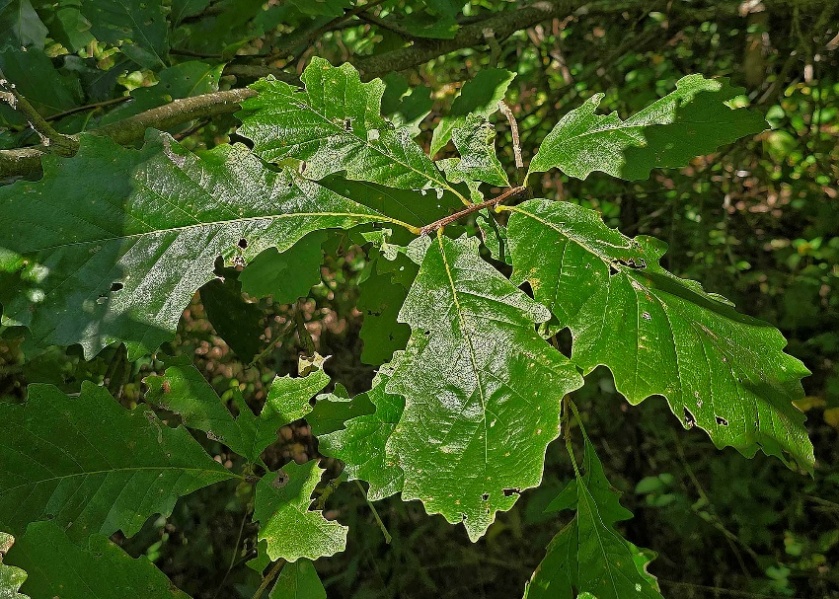
Rural Perspectives: Area’s white oak turns orange-gold to yellow in fall
by Diane Constable
The swamp white oak, Quercus bicolor, is found throughout our area near semi-wet woodlands and in low-lying fields. It is one of 10 oak species native to Michigan, and there are about 90 species in the USA.
It belongs to the white oak group with rounded leaf lobes, while the red oak group has lobes that are pointed with bristles on the ends. Oaks are closely related to beech trees.
The swamp white oak is a medium-sized oak, growing up to 80 feet tall and 60 feet wide. It will live up to 300 years. The 3-to-7-inch-long leaves are not as deeply lobed as our other oaks, and they turn shades of orange-gold to yellow in the fall. Short, yellow-green catkins bloom in May, and the 1-inch-long oblong acorns mature in about six months. At about 20 years old, the tree will begin to produce a good crop of acorns every three to five years, with a lighter output in other years. The ridged, thick bark of mature trees is a light gray color.
Nearly 200 species of birds and mammals feed on these sweet tasting acorns, including squirrels, deer, bears, turkey, and ducks. Swamp white oaks host more than 500 species of butterflies and moths, in addition to many beetles and gall wasps. They also provide home and shelter to numerous species of birds and other animals.
Its water-, insect-, and decay-resistant hard wood is valued for furniture, flooring, trim, railroad ties, boat building, and barrels.
Native Americans used the acorns for food and ground them into flour for baking and thickening. Parts of the tree were used to cure a variety of illnesses, such as digestive issues, congestion, and tuberculosis; some parts were used as an astringent.
The swamp white oak also is a good landscape tree for providing shade, and it is tolerant under a wide variety of conditions.
Fun Facts: The scientific name Quercus is Latin for oak tree, and the bicolor name describes the tree’s leaves of glossy green on top and silvery white underneath. This stately oak was chosen to be planted around the 911 Memorial in Manhattan, New York.
As an avid photographer, Diane Constable regularly puts her formal education in both nature and photography to good use. Diane also enjoys gardening and her dogs. She serves on the board of the Ann Arbor Dog Training Club and is editor of the club’s newsletter.


Related Posts

Death Notice for September

Kitley’s Smoke Shack: A new business carries the family name