Faces of Addiction
Scars of sober support—The other side of the story
by Tina Cole‑Mullins
October is a month that brings its own kind of clarity. It asks us to look at addiction not just through the lens of the person fighting it, but through the eyes of the ones who stand beside that fight. With Substance Abuse Awareness Month and World Mental Health Day falling on Oct. 10, we’re reminded that addiction and mental health are inseparable conversations. When one fractures, the other strains—for both the addict and the supporter.
Last year, Faces of Addiction presented an update on Richard’s journey, which began in 2018, “Through the Eyes of the Incarcerated“ (Aug. 2018). His struggle, his effort, his early steps toward sobriety were later chronicled in “Nine different, but powerful, words pierced through silent veins of addiction” (Dec. 2025). What I didn’t explore then was my own place in that story.
This year, I’m stepping into that space, offering the part that often goes unspoken: the experience of loving someone through addiction while trying to stay whole yourself. Loving an addict has taught me a lot about myself.
First and foremost, what I learned is that support only works when the sober support system protects their own stability. Think of it as telling yourself, “I can care deeply without carrying the weight of his choices.” That realization changed the way I show up in every relationship these days.
There were moments with him that shifted everything. Subtle turning points when Richard’s effort met my hope. They reminded me that addiction isn’t linear. Seeing him genuinely try, even imperfectly, reshaped how I understood both love and recovery and part of recovery is relapse.
Over time, my self‑care became something I practiced daily. I learned to steady myself first instead of trying to be the anchor for both of us and others. That shift offered a healthier connection to relationships, not codependence or feeding the trauma bond that once tied us to the darker parts of his addiction.
And somewhere along the way, I realized I had already begun building what I first described in my 2025 “Chasing Light” article (May 2025) as my “travel bag of coping skills.” These were tools gathered through years of healing, reflection, and survival. Gardening taught me patience and quiet hope. Camping and traveling gave me space to breathe outside toxic environments. And DBT talk therapy helped me reach “wise mind,” that place where clarity outweighs chaos.
“Wise mind is not always a happy place, but it is a healthy place.”
The tools mentioned above weren’t just mental health tools; they are lifelines that kept me grounded while loving someone whose world is unstable.
I also learned that my boundaries aren’t boundaries unless enforced. And enforcing them requires consistency—the willingness to draw that line and hold it, even when emotions pull you toward old patterns. I could show up without sacrificing my peace, and I could support him without becoming responsible for his sobriety, all while I gained my own emotional sobriety. That clarity changed everything, not only for me, but for him. Even my sense of hope evolved. My hope for Richard isn’t about imagining a perfect future or even a relationship; it’s about appreciating honest effort. Progress matters more than perfection now.
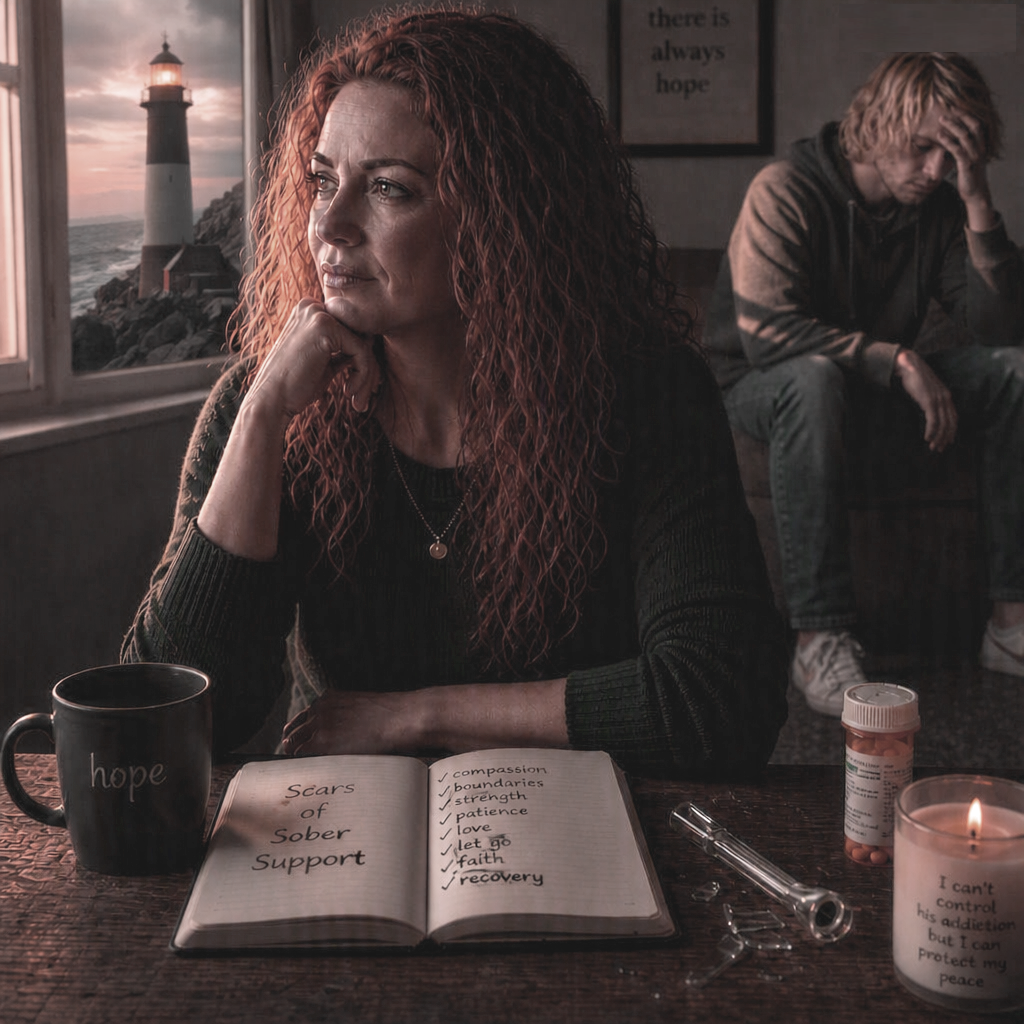
There are scars, of course. The scars I carry are quiet ones of fear, fatigue and uncertainty. But they didn’t break me. They taught me to love with clarity instead of within chaos and to choose peace even when life feels unpredictable. Trauma doesn’t disappear, but you learn to carry it differently.
Through all of this, my growth is visible. I trust slowly. I protect my peace without apology. This relationship didn’t just change how I love Richard—it changed how I love myself, and I know one can love from afar. That’s why this year’s story feels different. My evolving story isn’t the same one I told last year. That was Richard’s story and the stories of others.
Now what I’m telling is my story—the part lived by the person standing beside addiction, learning and healing in real time.
And in the end, my truth today is simple: loving someone in addiction is both beautiful and brutal. Support means standing beside someone, not saving them. There is a fine line between supporting an addict and enabling them and learning to walk, and enforce, that line is part of the healing. It means choosing compassion without losing yourself. It means believing in progress, even when the path is uneven.
This is the part of the story that often goes untold. It’s the lighthouse in the storm, the quiet resilience of the one holding the light.
Journalist Tina Cole-Mullins covers a range of topics and issues for Stockbridge Community News, including her Faces of Addiction and mental wellness contributions. A lifelong Dansville resident, she volunteers as a community outreach facilitator, helping ensure individuals and families can access the resources they need.