Positive Parenting
Balancing: A tool of discipline for parents and children
by Tiffany Snyder
Dr. Seuss shares great wisdom in the book, “The Places You’ll Go!” The last pages are especially insightful.
“So be sure when you step, step with care and great tact.
And remember that life’s A Great Balancing Act.”
As parents, we do not give ourselves enough grace for our part in the balancing act. Many of us think being balanced is perfection. We think our minds should feel fresh, our bodies limber, our social circles full, and our kids should naturally want to explore a variety of experiences. But when we have a headache or our children consistently want screen time, we are tempted to throw in the towel on the balancing act. We might get discouraged and begin to question if something is wrong with us. … The anxiety is too much! … Will we ever get it right?
Don’t worry, you are not alone, and there is hope!
I’ve learned that my perception of balance was flawed, and maybe yours is too. In fact, perfect balance doesn’t actually exist. The paradox of balance is that achieving true equilibrium requires embracing constant, graceful imbalance, rather than maintaining a static state or “goal.”
True balance means choosing priorities, accepting temporary unevenness and focusing on what matters in each season.
Remember how you learned to ride a bike? You probably recall stiffening your body to maintain balance—and then falling. Do you remember how leaning into the turns and allowing your body to move as you pedaled magically increased the length of your ride? Do you remember finally focusing your awareness on where you were headed? Riding a bike is a great metaphor for balancing our family, health, friends, spirit, and work. In other words, keep your priorities, but loosen up and realize you might have to let something go in order to focus a little more in another area.
In “The Road Less Traveled,” by M. Scott Peck, MD, the fourth tool of discipline is “balancing,” and he insists we must learn this tool and teach it to our children. Delaying gratification, accepting responsibility and committing to truth are the first three tools, but these can only work at adjustable rates; hence, there’s a need for balancing.
Peck argues that these tools enable children to work through, and systematically solve, the pain of problems, which ultimately produces growth. He argues that most people avoid the pain of dealing with their problems and suggests it is through facing the pain of problem-solving that life becomes more meaningful.
So, just because we can’t find one solution that fits all of the time doesn’t mean we should stop trying. Solutions change with the season, and it’s the greatest job of all to find our graceful imbalances.
You’ve got this!
Activity Highlight:
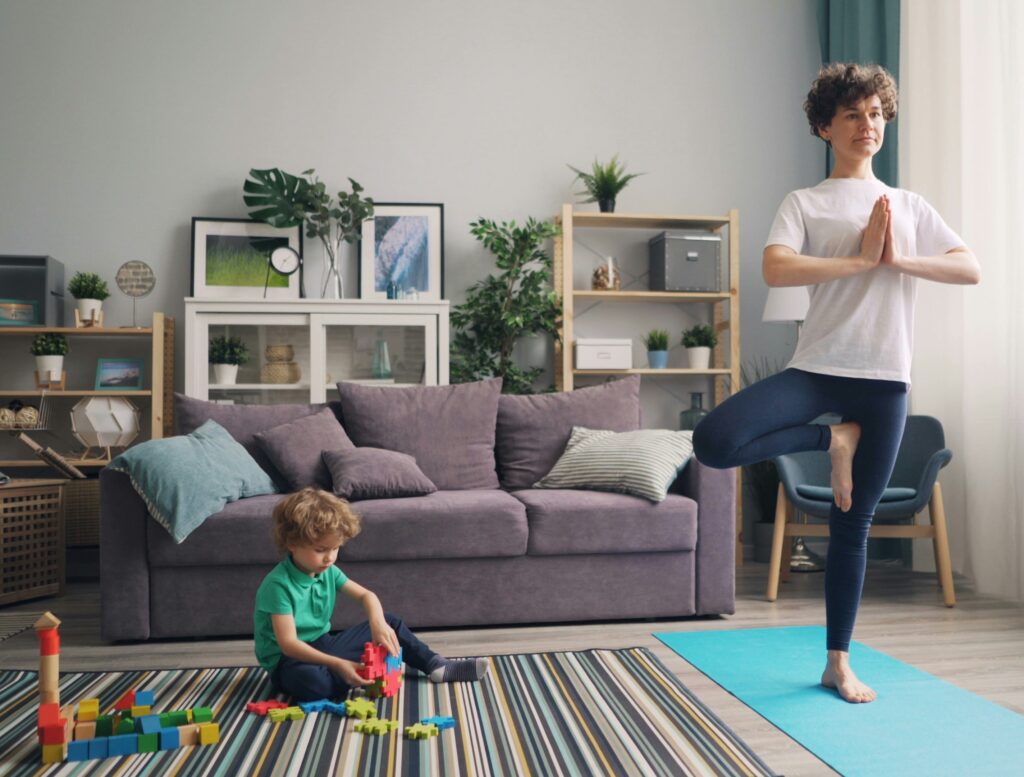
Improve physical “balancing” with yoga. Try the tree pose with help from flowandgrowkids.com.
How to do the tree pose:
- Mountain start: Stand tall with feet a hips-width apart and arms by your sides. Imagine a string pulling the top of your head toward the sky.
- Find a spot: Look at one unmoving point on the floor or wall in front of you to help keep your balance.
- Root down: Shift your weight onto one leg (the “trunk”) and imagine roots growing from your foot deep into the earth.
- Place the foot: Lift your other foot, and place the sole against your inner ankle, calf, or upper thigh. (Avoid the knee, as pressing on it can hurt the joint.)
- Grow branches: Bring your hands together at your heart or reach them high above your head like branches reaching for the sun.
- Hold and breathe: Stay steady for a few deep breaths, then switch legs to keep your “tree” balanced on each side.
Tiffany Snyder is a returning resident of Stockbridge. She taught K-8 art in West Michigan for 15 years and now enjoys being a toddler- mom and teaching “Art for Your Mind” classes.


Related Posts

Paid Political Advertisement

Munith Halloween Parade & Costume Contest: Sat., Oct. 24