Reading Between the Lines
And the stalker makes three: Moriarty delivers a love story with a twist
by Jessica Martell
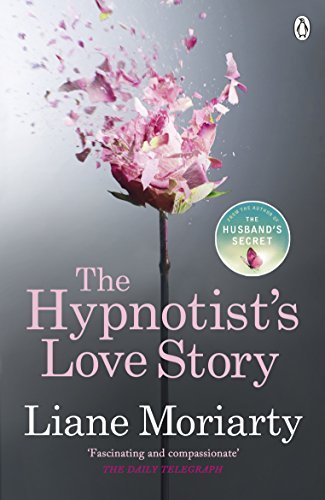
It’s a stretch to call Liane Moriarty’s work literary fiction, but “The Hypnotist’s Love Story”is a step above the kind of cozy mysteries and beach reads I’m usually drawn to. Moriarty creates interesting characters, subjects them to clever plots, and generates just enough tension to keep the reader turning pages.
In the first few pages of “The Hypnotist’s Love Story,” the reader gets just a teeny, acidic glimpse of the hypnotherapist, Ellen, through the eyes of a bitter, jealous patient.
“I could sense her happiness. It radiated off her, sickly, like cheap perfume; not that she would ever wear cheap perfume.”
Before the reader can fully acclimate to the narration, the perspective switches to third person, where we see Ellen on her fourth date with Patrick, who intimates that he has something important he needs to tell her. The big revelation is delayed by a lengthy interruption, during which Ellen convinces herself he is breaking up with her. When Patrick finally returns to the table to reveal the big news—he is being stalked by an ex-girlfriend, who has followed them into the restaurant—Ellen is actually relieved.
By this point in the story, readers have settled into the rhythm of the narrative, perhaps forgetting, as I did, the sassy attitude toward the hypnotist in those opening pages.
By the end of Chapter 2, it becomes clear that the sassy first-person narrator who readers meet on page one is the stalker, Saskia. Ellen, who becomes quite intrigued by the idea of Saskia, has no idea that the stalker is one of her new clients.
The writerly choices Moriarty makes create an interesting dynamic. While human nature and common sense might suggest that readers would sympathize with Ellen and Patrick, the fact that we get to know Saskia through first-person narration makes her unreasonably sympathetic to readers. Meanwhile, readers are almost unreasonably unsympathetic to Patrick, the victimized, widowed single father. Ellen, for her part, is likable enough.
One of the most ironic aspects of this trio is that Ellen becomes mildly obsessed with Saskia, puzzled as to how a woman like Saskia could give up being the main character in her own life. Rather, she seems to settle for being a minor villain in “The Hypnotist’s Love Story.”
Beyond the unconventional love triangle, this book gave me a peek into other unfamiliar territory, namely: hypnotherapy and Sydney, Australia. While I haven’t booked a trip to the outback just yet, I have poked around Spotify to see what kind of guided meditation tracks are available. I have found I quite like falling asleep as I focus on my breathing. To my knowledge, I haven’t been lulled into quacking like a duck or performing the hokey pokey in my pajamas. But of course, I wouldn’t remember if I did, would I?
All in all, Moriarty delivers an unexpected modern love story without smut or histrionics—a satisfying page-turner for fans of character-driven fiction with a twist.
Jessica Martell spent 17 years as a high school English teacher before accepting her current position as an educational consultant. She and her husband live in Munith with their cat, Scootie.

Related Posts

Chair of Livingston County canvassers, from Unadilla Township, participates in election security panel
Woah Nellie!