Rural Perspectives: The tufted titmouse often found at feeders in winter
by Diane Constable
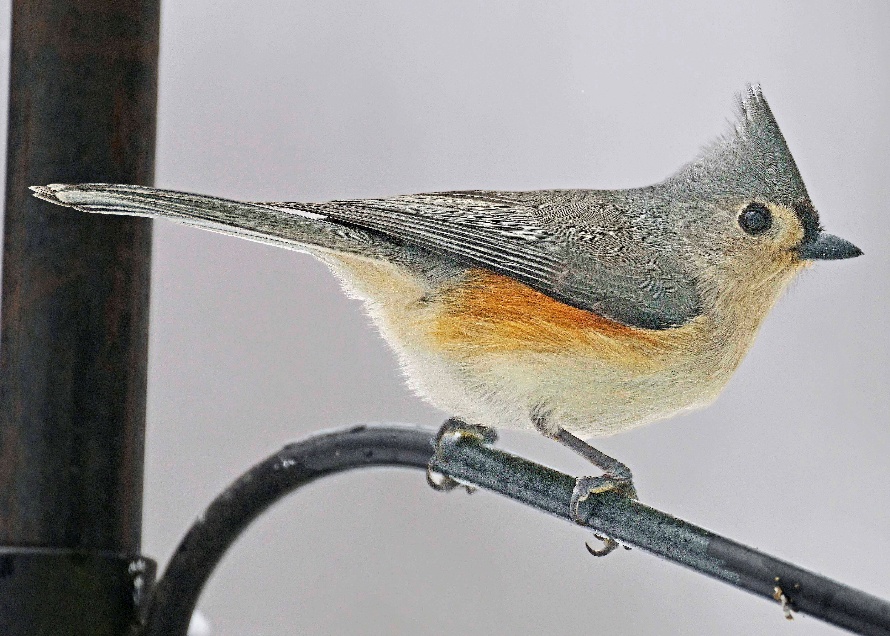
The tufted titmouse (Baeolophus bicolor) can be seen at local bird feeders year-round. The scientific name is very descriptive; it means “small tufted, two colors” in ancient Greek.
They can be found everywhere east of the Mississippi. Favorite spots are woodlands, orchards, parks, and suburban areas. Not being a migratory bird, they often visit feeders in the winter.
This active bird is in the same family as the chickadee and often can be seen feeding together. They are easily identified by the gray body and head tuft and the white underside. Males and females are the same color, and they weigh 6-9 ounces. They are about 6 inches long, with an 8-to-10-inch wingspan.
Tufted titmice mate for life and like to nest in tree cavities, old woodpecker holes, and birdhouses. The female does most of the work to make the nest of grass, moss, bark, leaves, and various animal fur, which the female will often pluck from a live animal. The male helps by bringing food to her while she is building. She lays up to nine eggs, which are 1 inch long. The eggs are white with brown spots, and hatch within 12-14 days. With the help of the male, and often chicks from previous broods, the babies are fed until they leave the nest. The family continues to watch over and feed the fledglings until they can manage on their own. The young will stay near the parents through the winter. They will live up to two years.
The titmice eat a variety of insects, including caterpillars, stinkbugs, beetles, and wasps. They also have a specially designed bill that allows them to eat seeds and nuts. Sunflowers seeds are a favorite.
Fun Facts: Tufted titmice can hold a nut or seed in their toes, then smash it with their bill to crack the morsel open. They also will take seeds from feeders and hoard them for a future snack.
As an avid photographer, Diane Constable regularly puts her formal education in both nature and photography to good use. Diane also enjoys gardening and her dogs. She serves on the board of the Ann Arbor Dog Training Club and is editor of the club’s newsletter.


Related Posts

ABBOTT & FILLMORE AGENCY—FULL SERVICE SINCE 1946

Adiska Family Dental—Accepting New Patients