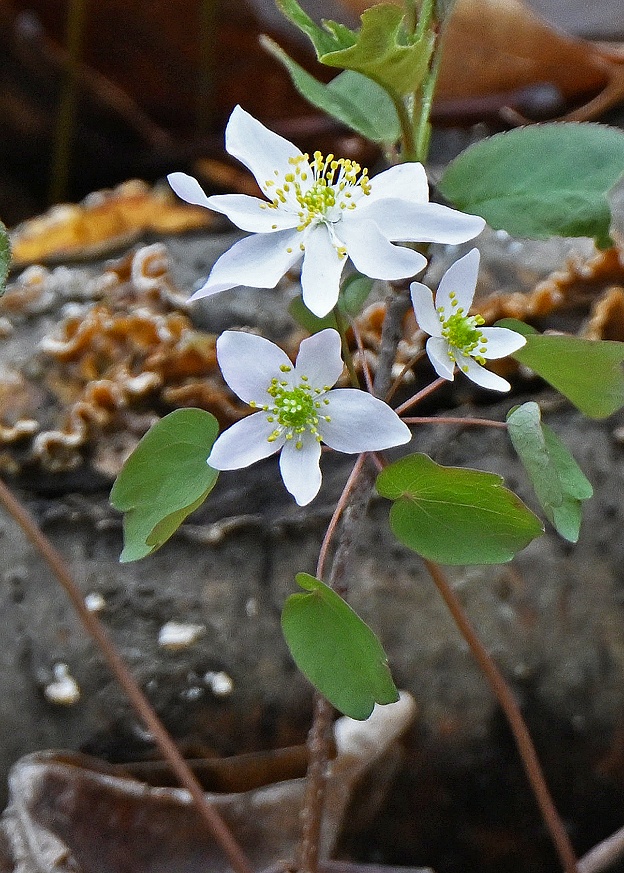
Rural Perspectives: Delicate and protected wildflower rue anemone blooms from April to June
by Diane Constable
The rue anemone (Thalictrum thalictroides) belongs to the buttercup family. This protected, delicate wildflower can be seen in our woodlands and along meadows and streams. Part of its name, anemone, comes from the name of the Greek wind gods, the Anemoi, because its thin stalks move and tremble in any slight breeze. They also are sometimes called windflowers.
This anemone is one of our earliest perennial spring wildflowers. It blooms from April to June and lives in moist, shady areas in woodlands and along streams. It is about 4-8 inches tall. The medium-green leaves grow from stems that come from the roots, and commonly have three lobes. It does not have true petals, as the 1-to-1.5-inch star-shaped flowers are white sepals and are sometimes tinged with pale pink. Each flower will produce five to 15 seeds.
Although the plant does not produce nectar, many insects, including butterflies and some bees, will feed on the pollen. The leaves offer food and shelter for a variety of insects because the leaves contain a toxin not eaten by mammals.
All parts of the plant are toxic. The sap can cause blistering and, if eaten, can cause vomiting. Because the toxins are destroyed by heat, Native Americans used a tea from the roots for stomach upset.
Fun Facts: In ancient times, it was thought that winds that passed over this plant were poisoned and would cause sickness. The ancient Persians used the flower as an emblem for sickness. Another legend maintains that the flowers originated from the tears of the Roman goddess Venus as she wept over the death of her love, Adonis.

As an avid photographer, Diane Constable regularly puts her formal education in both nature and photography to good use. Diane also enjoys gardening and her dogs. She serves on the board of the Ann Arbor Dog Training Club and is editor of the club’s newsletter.

Related Posts

Paid Political Advertisement

Munith Halloween Parade & Costume Contest: Sat., Oct. 24