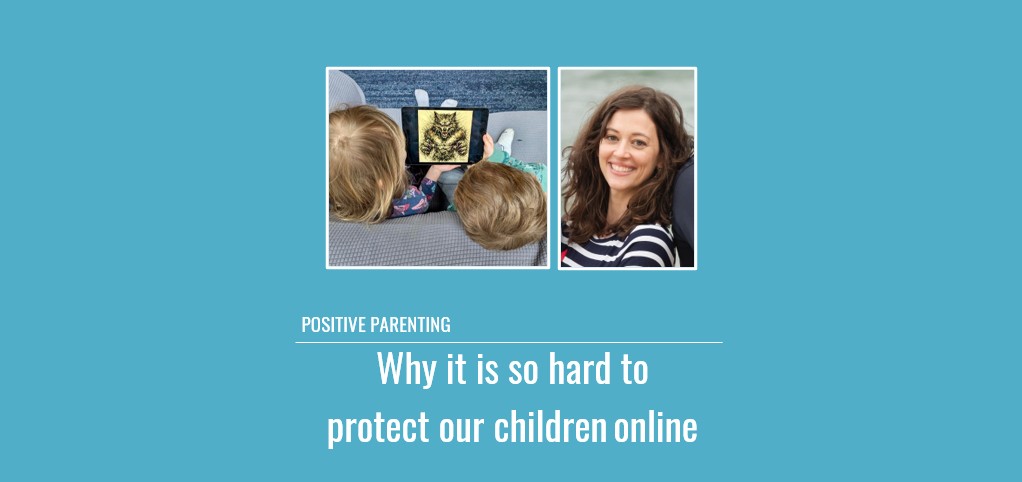
Positive Parenting: Why it is so hard to protect our children online?
by Kelsey Rasmussen
Put bluntly: Safeguards to keep children safe online are inadequate. Dr. Lauren Girouard, an expert in digital literacy and psychology, explains this in her public lecture “Exploring Digital Privacy from a Child’s Perspective,”during the University of Michigan’s Privacy@Michigan series.
Despite parents’ eagerness to protect their children online, Dr. Girouard reports 20% don’t know where to begin. One in six parents say they do not use parental controls at all, and for those who do, children routinely bypass “age gates” by clicking a button to claim they’re older than they are. Half of children ages 10-12 have some sort of social media; one quarter of 8-year-olds in the U.S. have a social media account despite the requirement to be at least 13.
Teachers and nonprofit organizations like Common Sense Media may be well-intentioned, but their tools quickly become outdated. Government faces intense lobbying from Big Tech, and regulations lag. Following are some eye-opening facts.
- By age 2, over 50% of American children have their own tablet.
- By age 5, the average screen use is 3.5 hours per day.
- 1 in 5 teens say they are on TikTok and YouTube almost constantly.
- 3 in 4 American parents share photos of their children on their own social media accounts. Of those, 81% use real names of their child(ren) and 25% of those do so on profiles that are public (meaning anyone with internet access could see the posts).
Dr. Girouard cautions parents about seemingly innocent things. Imagine a guest at your kid’s birthday party posts a photo to her public profile of your baby holding her “3” balloon and grinning through icing-covered cheeks. Cute, right? Posting that photo revealed your precious child’s age (the balloon), birthday (the date posted), and location (the metadata in the photo) to anyone online across the globe.
So what? The threat landscape is serious and rapidly changing. On Feb. 19, Kristen Setera of the FBI Boston field office published an open letter to parents warning of sickening online threats to children, especially 10- to 17-year-old girls, by nihilist violent extremism groups. They identify, groom, and coerce children into producing and sharing graphic content, then blackmail victims into doing increasingly horrible things to themselves. And sometimes to their siblings.
Big Tech is not a reliable protector of our most valuable national resource—our children. Social media companies earn big bucks on ads to children. They do so by profiling users and selling that data in real-time auctions to advertisers behind the scenes. It’s hard to imagine the scale and speed of these transactions. Even a “private” profile does not protect you from profiling and efforts to nudge your behavior (stay online longer, buy something, feel outrage, etc.)
The financial gain social media moguls earn for co-opting our children’s attention is staggering:
- Annual global revenue from ads to children ages 12 and younger: $11 billion.
- Annually, YouTube earned $959 million; Instagram $801 million; FaceBook $137 million.
- Half of SnapChat’s revenue comes from users under 18 years old.
Fines for violating children’s privacy pale by comparison:
- Europe fined TikTok $368 million (2023).
- YouTube paid $170 million for collecting children’s data without parental consent (2019).
- Epic Games (Fortnite) paid $520 million in FTC settlements (2022).
And the list goes on.
Imagine a 21st-century Brothers Grimm fairy tale: Can a big, bad wolf wander from the Black Forest to lurk behind screens, gobbling up children’s ability to develop safely and privately? It doesn’t really matter whose device it is—even Mommy’s phone reeks of stranger danger and manipulation.
Activity Highlight:
- With your child, hunt around the house to name everything that connects to the internet or AI. Explain how any “smart” or voice-activated toy is not your friend. It is not a he or she, but rather, an it.
- Double-check all of your social media accounts and those of your children to ensure view settings are private rather than public. Although their faces will still be recognized, profiled, and sold to data brokers online, private profiles reduce their exposure to sadists.
- Limit the currency Big Tech mines from your children—attention and ownership of their minds—at the expense of their ability to develop a self. Replace screen time with hands-on activities: Build something, start a hobby, read, paint, play sports, go outside.
Scan the QR code to watch Dr. Girouard’s presentation, or go to youtube.com/watch?v=VjXe7cQhW-o :


Photo credit: Kelsey Rasmussen (Wolf image generated by AI)
Kelsey Rasmussen is a local resident and full-time parent of preschool-aged twins.


Related Posts

Paid Political Advertisement

Munith Halloween Parade & Costume Contest: Sat., Oct. 24