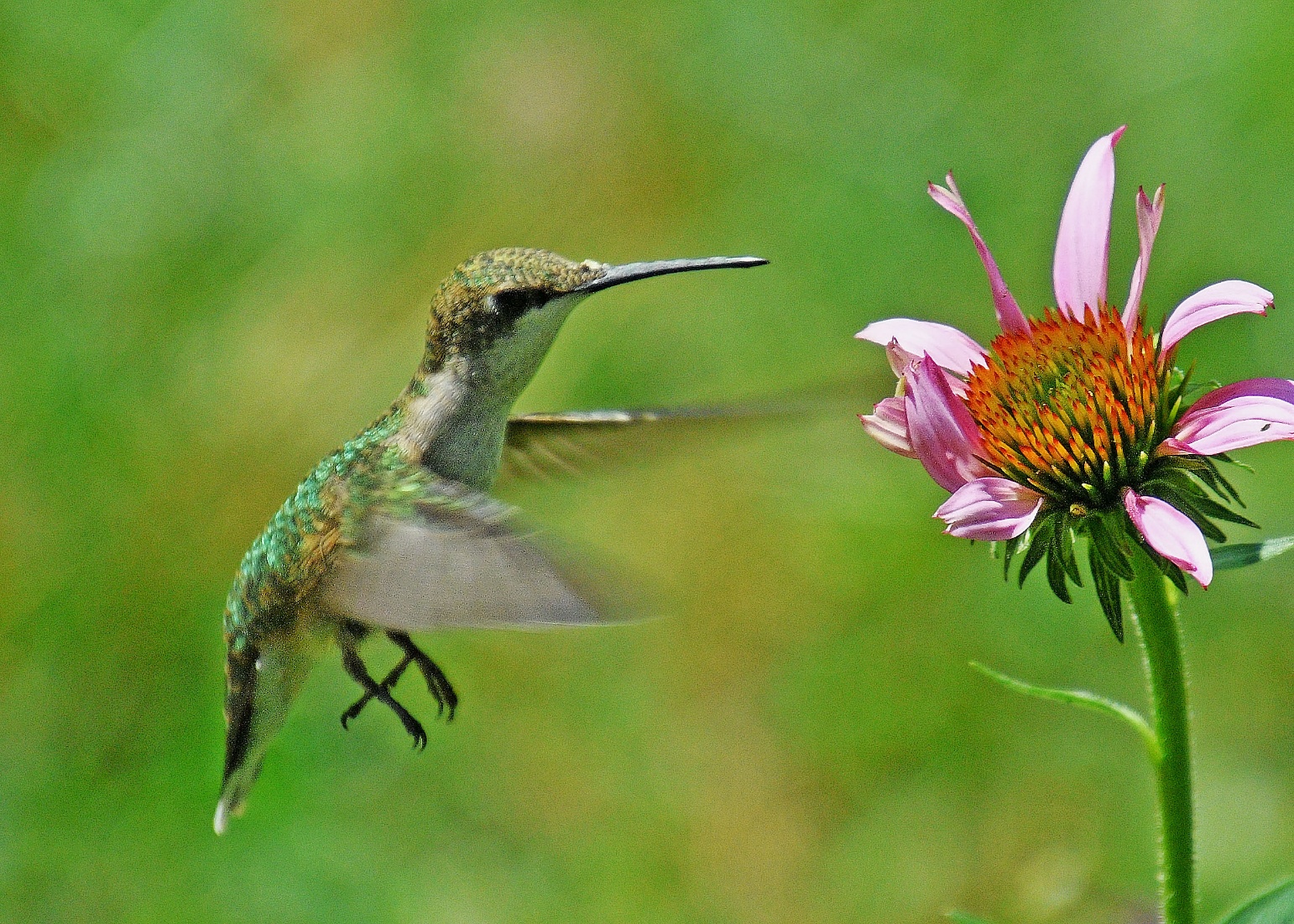
Rural Perspectives: Enchanting ruby-throated hummingbirds known for varied flight patterns
by Diane Constable
The ruby-throated hummingbird (Archilochuscolubris) is our smallest bird, and one of the most enchanting. It is the most common hummingbird in the United States and can be found anywhere east of the Mississippi River in woods, old fields, along streams, and in our yards.
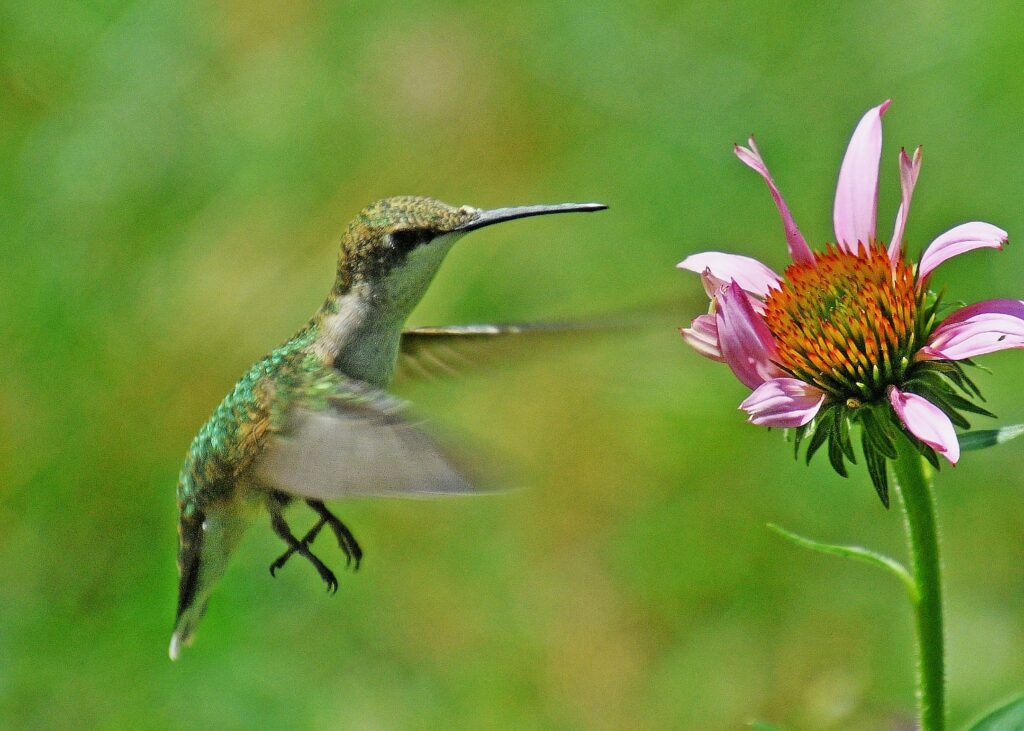
The male hummingbird has deep-green back feathers and a ruby-red throat that sometimes looks black, but at certain angles sparkles in the sunlight. The female (pictured here) has a white throat and golden-green back feathering. She is a bit larger than the male. They have claw-like feet that help them cling to flowers and stems, but their short legs are not built for walking. They must shuffle along to move about on branches or the ground.
They are best known for their flight patterns. Their wings move up to 53 times per second in a figure-eight motion, which allows them to maneuver left, right, forward, backward, up, or down, and even enables them to hover and fly upside down.
The migrating males return first in the spring from their winter homes in Florida, Mexico, and Central America. They will fight with other hummers to defend their territory and food sources. Females also defend favored food supplies. Using their long tongue, they feed on nectar with a small preference for red, orange, and bright pink flowers. The tongue is also useful for catching small insects on the wing or grabbing them from leaves and spider webs. They eat mosquitoes, fruit flies, small bees and spiders. They also can be seen at hummingbird feeders that, ideally, contain three-fourths water and one-fourth sugar. The water does NOT have to be dyed red to attract them.
They like to nest in pine, oak and birch. The nest is made with spider webs, dandelion, thistle down, and animal hair and decorated with lichen on the outside. It is about 2 inches by 1 inch and will hold one to three eggs, which hatch in about two weeks. The female is the sole caregiver of the chicks. At about 22 days, the chicks leave the nest. Hummingbirds will grow to a length of 3-3.5 inches and weigh 0.1- 0.2 ounces with a wingspan of 3-4 inches, and they live about 9 years.
Fun Fact: Hummingbird hearts beat 1,260 beats per minute, taking 250 breaths per minute—one of the highest metabolic rates of any animal. In cool weather it will go into a stupor until the temperatures warm up.

As an avid photographer, Diane Constable regularly puts her formal education in both nature and photography to good use. Diane also enjoys gardening and her dogs. She serves on the board of the Ann Arbor Dog Training Club and is editor of the club’s newsletter.

Related Posts

Paid Political Advertisement

Munith Halloween Parade & Costume Contest: Sat., Oct. 24